I’ve spent quite a bit of time this spring focusing on my shrub plants. Lots of these do their thing at the end of the winter and into spring before they drift off to obscurity and to the back of our minds as we instead focus more on the likes of our fruit and vegetables, summer bedding and herbaceous perennials.
I guess I’ve been guilty of this myself over the years with the way I’ve been managing the gardens I’m working in, carry out all the pruning required of my shrubs over the winter months even though that may not be the correct time to give the the maintenance they need. Which there’s nothing wrong with, I always think back to a reply the great George Anderson of Beechgrove Garden television programme once gave when asked when was the best time to carry out pruning, “When you see it!” he replied.
Knowing that I have a book shelf at home that includes titles explaining in detail the correct time and way to carry out pruning for virtually every woody shrub there is, my initial reaction was one of that’s not right! However, the more I thought about it, the more I understood just what he was referring to. By carrying out the cutting of a split branch or the removal of a stem encroaching a path when you see it well, that’s it done and if I’m being honest with myself, I’ve also seen many examples of plants being chopped at technically the wrong time only to see them still come good in the long run.
So, in George we trust I say!
With at one time him being Head of the School of Horticulture at The Royal Botanic Garden in Edinburgh, I know he would still be teaching these correct horticultural practices too, which are what I’ve been ensuring are carried out on my shrubs this spring.
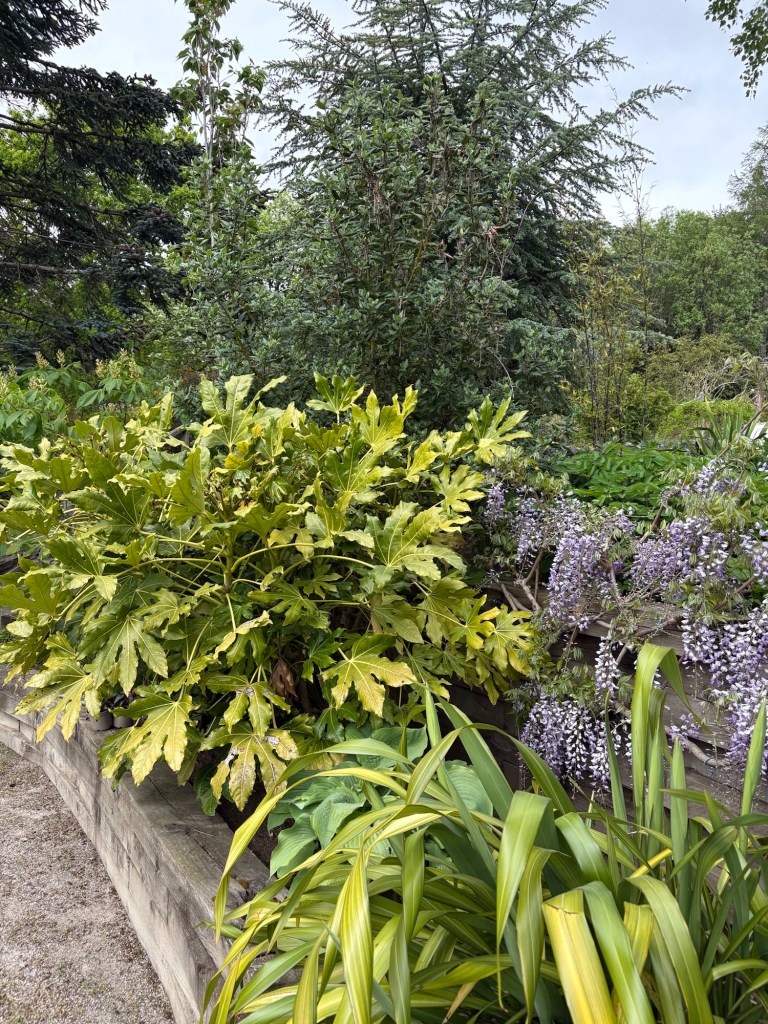
This week it’s the turn of the evergreens and in particular a Fatsia japonica. There’s something about this plant I like, with its palm like light green leaves and creamy white flowers in late summer into autumn, it can bring a touch of the exotic to our Scottish gardens.
Evergreens are great bringing height and structure into the garden along with valuable interest over the bleak winter months. For those time starved gardeners who just want an easy life, evergreens are low in maintenance only needing a little work to tidy up and keep them looking vibrant and in shape. That work is carried out at this time of year now that the risk of frosts has passed, being just at the point when the the plants are at their most energetic to produce new growth that will then have all summer to grow and toughen up before another winter sets in.
Fatsia is a funny plant growing wider than it does tall when left to its own devices but that unfortunately is the cause of its trouble for me with its foliage now beginning to encroach a path. Which is next to a pond so you can understand the need for me to carry out some works unless I wish to end up getting my feet wet!
It’s a plant well clothed in foliage from bottom to top so to identify just what to cut I need to get down onto my knees and fight my way in for a better look, armed with my pruning saw. The first two branches to go are the main culprits that lean out at an angle in the direction of the path, so are easy to identify. Fresh growth on Fatsia’s grows freely from the base of the plant so I make my cuts as low down the stem of the plant my saw can get access to. Once removed I can see fresh shoots already making their move and that will now have room to flourish, as well as an almost instant result in getting safe access on the path.
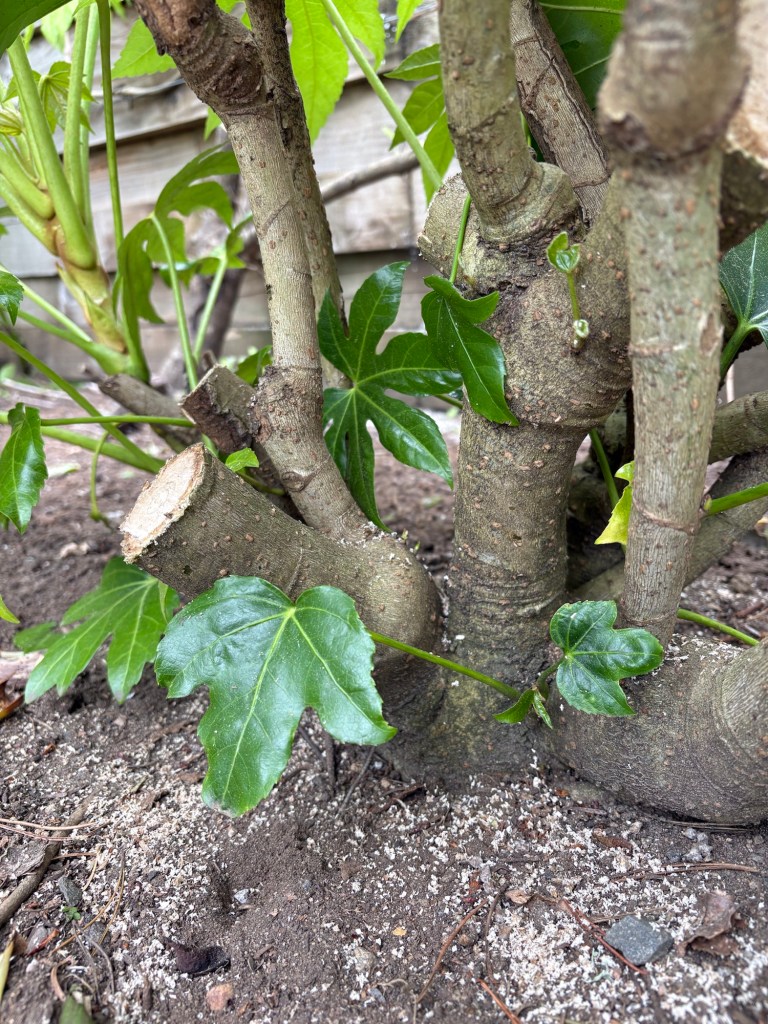
If I wanted to I probably could have simply stopped there but knowing I could remove up to a quarter of the whole plant without causing it any long term harm, I also removed a couple of the more leggier stems that just have foliage sitting on the top, growing in the centre of the plant to help relieve a little of the congestion. This is a garden task I intend to do every year at this time to encourage a regular supply of more vigorous and healthier shoots, giving me a more vibrant plant.
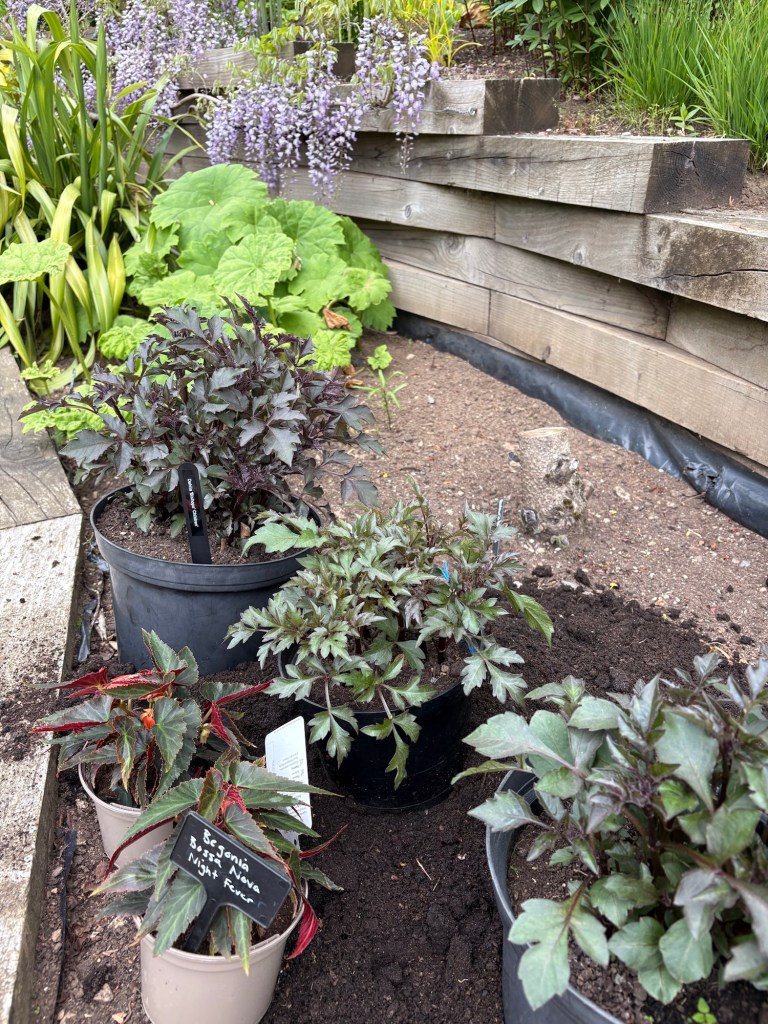
One slight negative I noticed with the plant now reduced in size was the patches of bare soil left behind, just asking for weeds to come in and find a home. As a similar plant partner of exotic feel, I’ve opted for a temporary planting of Dahlia ‘Bishops Children’ to fill the gap over the summer until the Fatsia fills out again. The dark bronze/ purple foliage is the perfect foil for the fiery coloured, open centred flowers that will come in shades of red, orange, yellow and pink.
I’d like to think George would approve.