It was nice feeling rain again after the dry spells of summer, a comment that will always sound strange coming from a Scot but does sum up the weather we’re having this year. I’ve found that in my garden it never got too dry, the rain always coming just when the plants and soil their roots are growing in, needed it most. So far no plant casualties but the dahlias have struggled with the lack of water, not reaching their full growth potential but thankfully the flowering display is making up for lost time now.
Not sure the same will be said by gardeners further south in the wider country, I don’t think I’ve ever witnessed such yellow scenes created by the parched conditions.
I’ve been interested to read reports on how collections of Rhododendron, Japanese Maples and Hydrangea, plants that require consistently moist soil to survive, are struggling in these conditions with serious concerns on their long termed ability to be grown there. Potentially good news for those involved in garden tourism in Scotland, maybe up here being the better environment for these plants in future although I won’t be taking it for granted that we’ll be immune from any climate change related problems.
I few weeks ago I took part in a viewers question item with George Anderson on Beechgrove Garden television programme where “what plants will be able to grow in future?” was being asked of us. It’s a difficult one to answer I guess as nobody really knows, we’re all part of this climate change experiment searching for plants that can cope long periods of wet or dry, warm or cold along with numerous winter windy storms.
In an attempt to answer the question the current thinking is looking towards those plants found growing in Eastern Europe as having the potential to do well here in the future, especially trees but even then we’re being advised to simply grow a wide variety as possible and from anywhere, as even our own birches and Rowans are showing signs of the struggles ahead.
Dry conditions are not totally unfamiliar in our gardens. In fact, I was looking at one such area up at the Beechgrove Garden the other week that not only has this as an issue thanks to the root system of a beautiful, glaucous foliaged, Atlantic cedar, but as the bed in question was also on the north side of this conifer, there’s shade to contend with too.
Dry and shade, now there’s a challenge but of course, where there’s a gardener there’s always a way!
With dry soil the best thing we can do is improve its moisture retention ability by adding some compost. Here I was able to use some of Beechgrove’s finest own homemade compost thanks to the gardens team there, with leaf mould also a good option. Bags of good old farmyard manure is possibly the best option, enriching the soil in the process, but I’d let this settle over winter first and some of those nutrients wash through the soil so the plants don’t get too excited before winter or their roots scorched.
All in though, late summer/ early autumn is the best time to carry out work on this problem where between the rains coming in and the warm soil from summer, it’s easier for the roots of plantings to get themselves into the soil and established compared with the challenges of a dry spring.
One garden practice I’m never convinced with, is improving the soil of the small area around an individual planting hole of what we are about to put in the ground. With the likes of this Beechgrove site of dry soil, if I’m only doing the small area around the plant, then why would the roots be encouraged to stretch out and beyond? I’m not convinced they ever are or when they do it’s with less vigour, not encouraged to go on the hunt for more moisture or be able to support itself properly during stronger winds.
Instead, with a single planting I’m more inclined to mulch the surface of the soil around the new planting to a good 7cm once the plant is in the ground and watered, trapping moisture and inviting more worm activity and beneficial bacteria to improve the soil structure.
Back to the case of the Beechgrove bed, I do believe incorporating compost into the soil will help but over the wider planting area as a whole, then giving a light fork over to mix this all in.
Ground cover plants like periwinkle that flowers come in blues and whites, the wonderful Japanese Anemone perennial plant ‘Honorine Jobert’ with lovely white flowers in late summer, and Aucuba japonica one of the toughest shrubs for dry shade, these are the selections we chose.
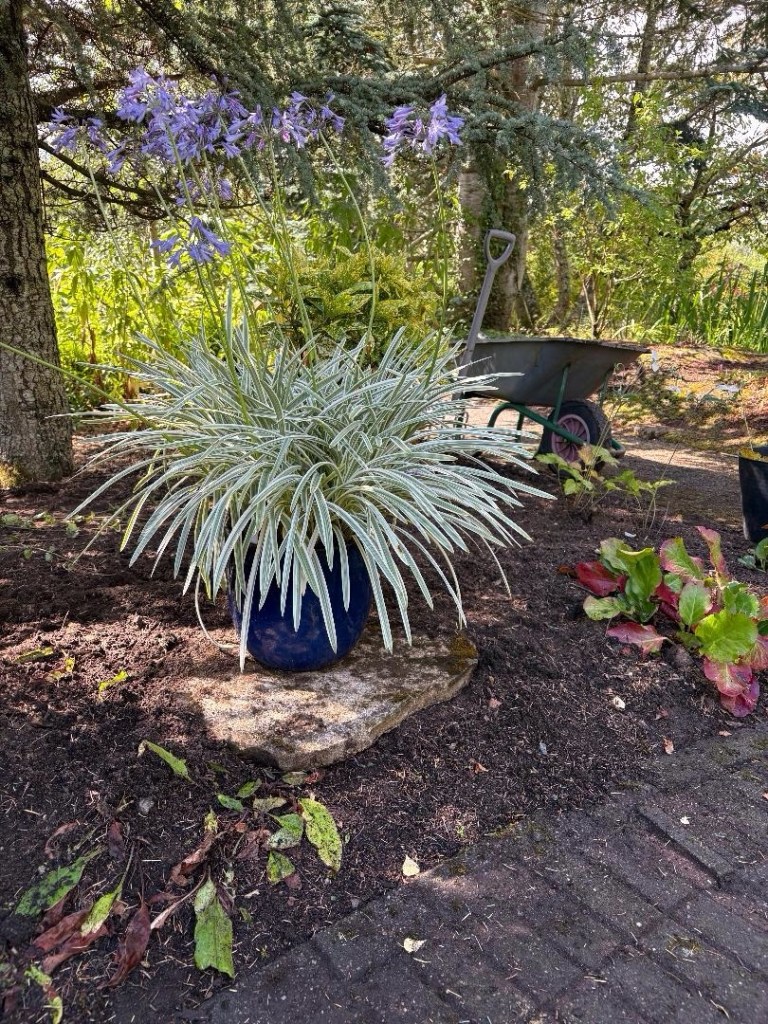
However, I saved a wee trick till last. I’m a big fan of growing plants in containers where here, I left a small gap in this group of new plantings to place a pot of the variegated Agapanthus ‘Silver Moon’, giving me an opportunity to add an ever changing touch of brightness and colour on a regular basis to this tricky little spot.

