Our gardens are being fuelled by perennial power at the moment! Of course, shrubs such as Cotinus with its smoke-like plumes of flowers also add sparkles of interest and some of those woody plants that flowered earlier in the year back in spring are rewarding us with a second display, this time of colourful berries that provide visual interest to us and a tasty treat for the birds.
I really don’t feel comfortable saying this out loud but there’s no hiding that there are even plants starting to turn and show glimpses of their autumn-coloured foliage display. I’ve noticed this particularly so on a Sweet Gum tree near me, Liquidamber styracifolia ‘Worplesdon’, where some its leaves are starting to take a shade of scarlet for which they are celebrated for.
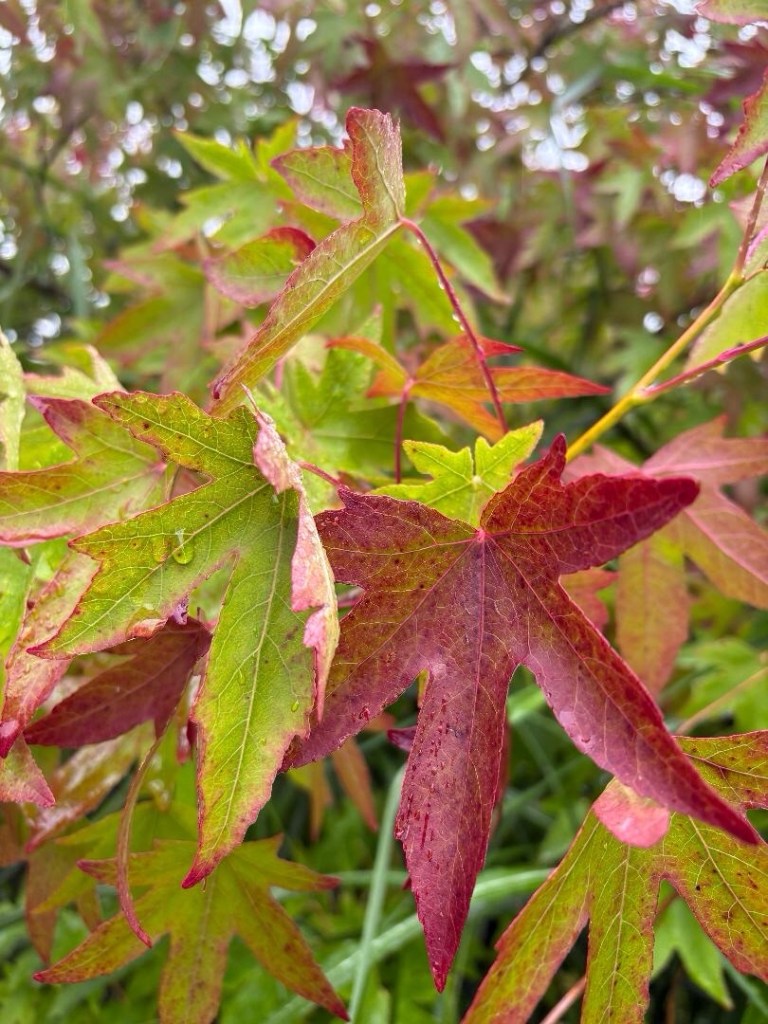
It’s too soon, too soon.
Now into the month of September its hard to deny to myself that we’ve one foot into autumn and we’ll be seeing a lot more of this but for now, this is being put to the back of my head and I’ll live in the moment of the colourful perennial plant display that has been waiting all summer long for its moment.
Using the term ‘perennials’ may throw you, but you’ll soon recognise some of the names in the group of plants I am referring to- Lupins, Aquilegia, Lady’s Mantle and Geranium being some of the spring and early summer flowering which if you had cut back the stems down to the base of the plant after flowering, may actually be enjoying a second flush of flowers just now. This may not be as vibrant a display as before but still a clever trick of extending the colour in your garden if you only have room enough to grow a few.
Shrubs have this structure of woody stems giving a permanent backbone to the garden, particularly over the winter months where an evergreen holly or clipped yew can provide much needed interest during the darker months. Whereas, the foliage of herbaceous perennials is a soft, green tissue that dies back down to their roots in the ground, every autumn. This too can be left for winter interest just as long these dead stems are cut off at the base before the plants start to re-grow again in spring, the plant repeating this process over many years hence being given the term perennial.
Our gardens have been of late and continue to look glorious thanks to them just now. A driech day can be found in summer and autumn during the flowering time of these plants but no doubt a different feel and mood can be found during a damp day in September to that of August. That’s where the warming red, pink and orange, then yellow and golden tones associated with the flowers of these late season herbaceous perennials, keep within us that little bit longer the feeling of the sunlight, fire and heat of the summer that’s beginning to slip away.
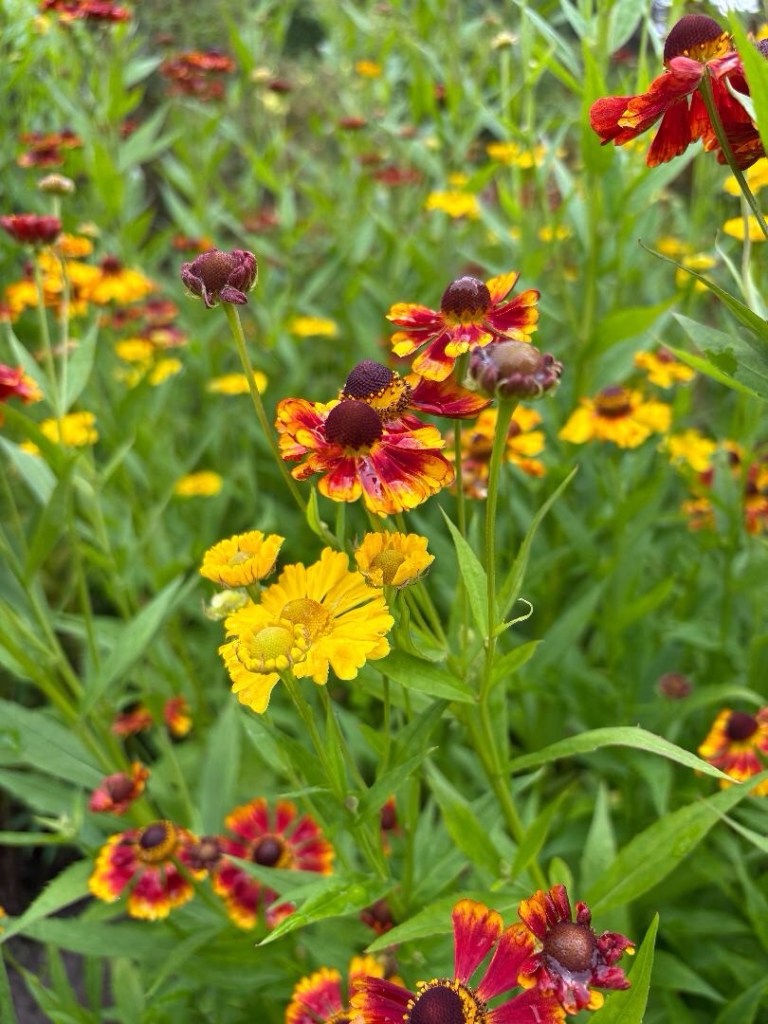
Helenium autumnale ‘Rot-gold’ hybrids is a plant that captures the current mood perfectly for me. One of the daisy plants, those of you that can speak German will be able to decipher from the name that the petals of this plant are a combination of red to golden in colour also with the attractiveness of being fringed, completed with matching tone centre. This colour combination within itself is a good one but when planted with the afore-mentioned Smoke Bush and Sweet Gum tree, can create a near idyllic autumn border look.
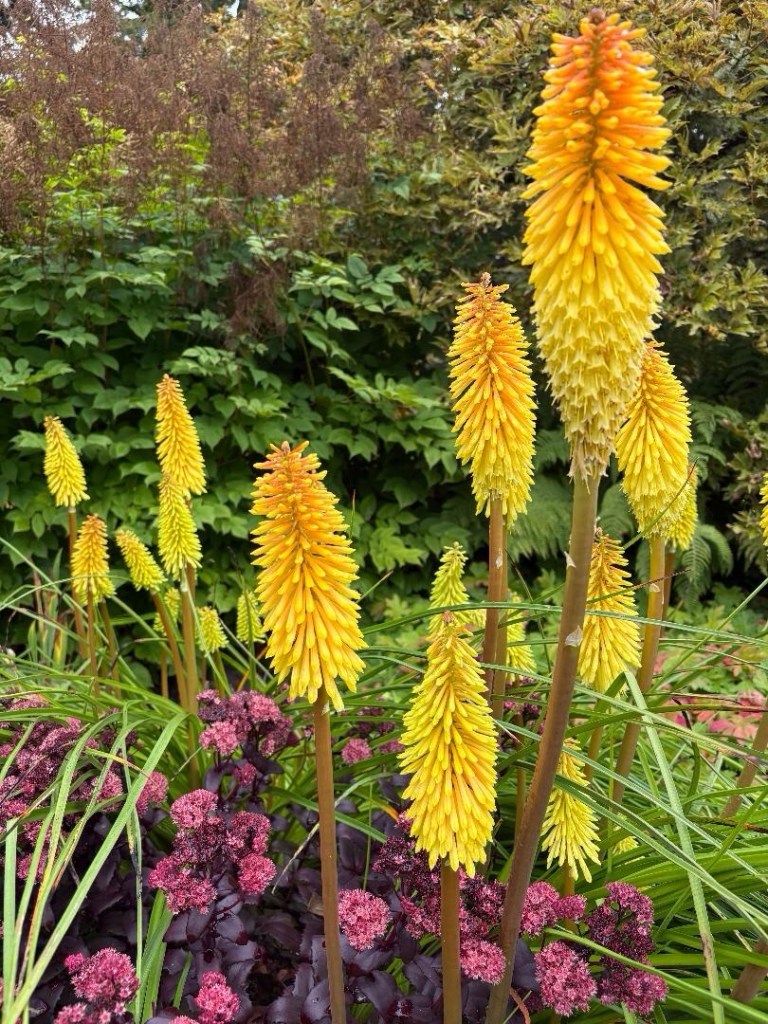
‘Red hot poker’ plants get their name from impressive torch like tubular flowers produced atop sturdy stems, emerging from clumps of grassy foliage. This common name is a bit deceiving for all plants of Kniphofia as the flowers also come in glowing oranges and yellow to calming greens and creams, more special are those with two-toned effects.
Gardeners in Scotland may find Kniphofia a touch of hit or miss for them, they disliking a typical wet winter found here, therefore finding the correct spot in the garden can be key for growing them successfully e.g. I grow a clump in my own garden in a drier spot within the rain shadow of my house. This refers to the dry strip of soil found against a building which blocks natural rainfall from reaching the ground.
Although still a perennial, the foliage of this plant makes it an evergreen so avoid a full chop down in spring saving the job of tidying any dead foliage until this time, after they have completed their task of protecting their crowns over winter.
Finally, don’t rule foliage out as part of the value of a perennial plant. Actaea simplex ‘Brunette’ is a striking plant prized for its dramatic, dark purple-black leaves that can hold all the other warm tones found in a border together. This has been the effect I’ve taken from this plant over the past few weeks, only now looking at the plant itself and admiring its own bottle-brush white flowers.
In September, one day the weather could be this, then the next day that, the one thing that stays the same is the joy a herbaceous perennial will have in your garden.

