Filming of the last Beechgrove Garden episode of the year took place the other week, currently being aired this weekend across BBC channels. That now sees the 49th series completed of this programme first started off in 1978 by a couple of industry respected gardeners in the great Jim McColl and George Barron, who used the garden around the BBC studios in Aberdeen to keep us up to speed on what we should be doing in our gardens at home each week.
Forty-nine years of Beechgrove Garden! That really is quite a remarkable figure showing just how gardening has managed to maintain its popularity and significance in Scottish culture over that period of time.
There’s no doubt it wasn’t just their knowledge but also the personality of those presenters during the early years that helped give the programme such a solid footing to reach these heights, the warmth of their relationship made us viewers feel like we were down the allotment working on our veg with them or having a blether over the hedge with a neighbour next door.
Jim just didn’t nurture the programme out of the ground but continued to see it flourish into maturity only retiring in 2019 after 41 years of guiding us in our gardens, many of these years alongside Carole Baxter who together they formed a formidable gardening duo. Carole herself having now given us forty years of sharing her immense wealth of gardening knowledge with us.
If Jim and Carole are like a sturdy Scot’s Pine and shapely Rowan tree that provide our gardens with the structure that holds it together, other presenters like myself have come and gone supporting them just like the shrubs, perennials and bulbs that make up the rest of our gardens. I’d like to think the provenance of us has been from good garden stock too-plant growers, garden centre owners, RHS judges, landscapers, college lecturers and head gardeners some of which for Kings and Queens.
Only the best for Beechgrove Garden viewers!
I’ll always see it as a privilege to be a small part of the Beechgrove team made up of producers, camera operators, sound technicians, directors, runners, gardeners and volunteer gardeners, who we all work-together to ensure we give you good gardening advice and a half-hour of escapism each week. The series may be finished for 2026 despite us knowing there’s still plenty of gardening to be enjoyed during autumn and winter, but I do hope you’ll join the team again next year and the fiftieth year of Beechgrove Garden.
Whilst in some aspects of gardening it’s the time to year to say goodbye, in other parts it feels like the garden is just starting to come alive with the fiery tones of autumn.
As I look across the landscape that surrounds me, comparing with the same point in previous years, it’s funny how no two are ever the same. The grand oaks and sycamore trees still look green, lush and full of life, whilst the Poplars still holding on to leaves that I’ve seen fully shed in August before. Taking a closer look at some of the other trees and signs are clearly there to see that the change is happening, golden-yellow leaves are beginning to gather at the bottom of European lime trees and the foliage of beech trees losing its gloss.
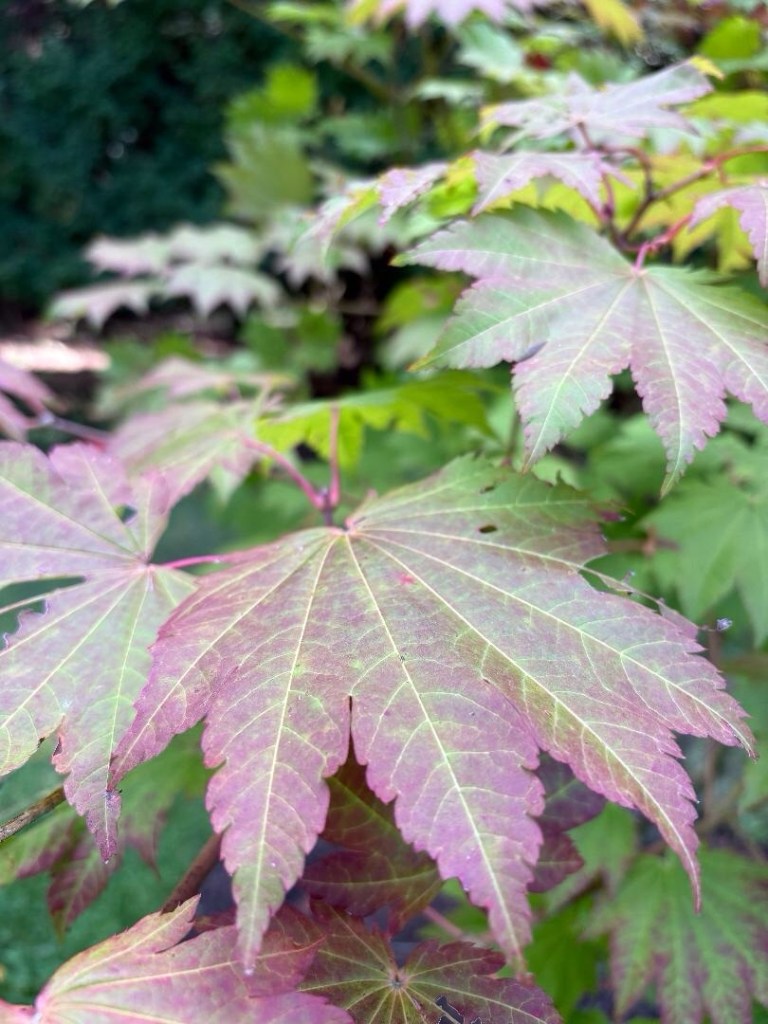
The canopies of Japanese Maples may overall still give the impression of their summer tones but on closer inspection you can spot patches where the yellow and red pigments that colour leaves, are shining through now that the plants are being signalled to stop making the green with the arrival of the shorter days and cooler temperatures of autumn. The transition making for some wonderful effects.
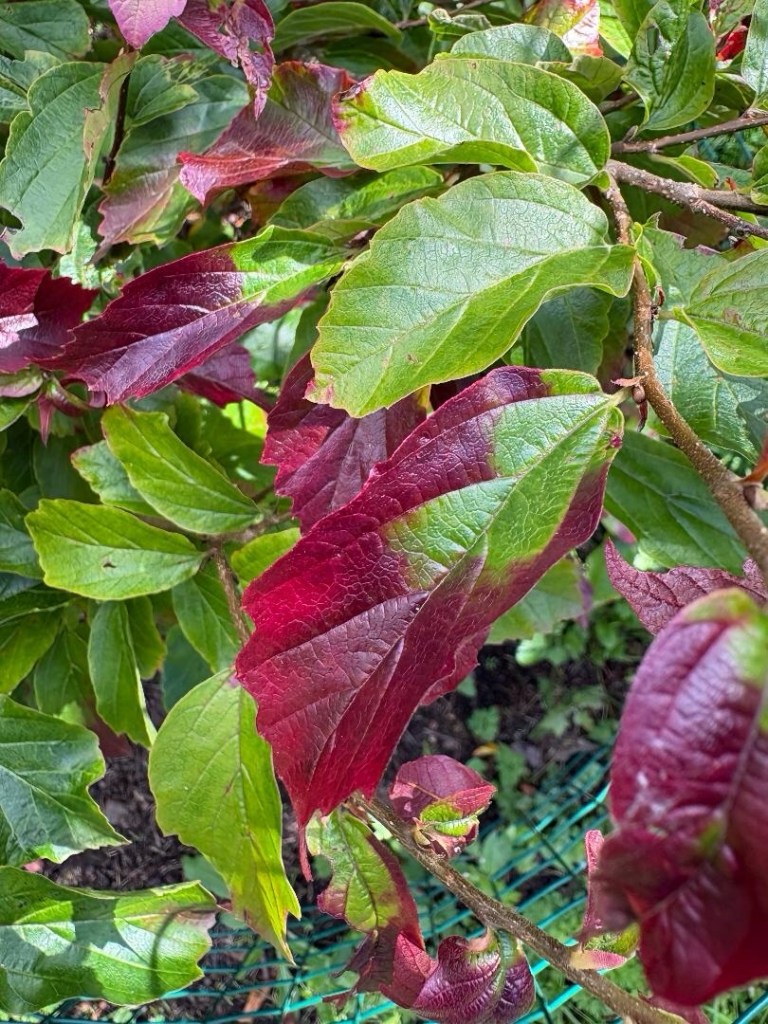
Then on possibly the best of the best for an autumn foliage display, the Persian ironwood, the purple border on the green leaves is beginning to dominate which will soon be joined by shades of yellow to orange making one of the most striking displays from a plant. The cultivar ‘Persian Spire’ makes a fine specimen for the average sized garden being an upright shrub reaching around 6m in height.
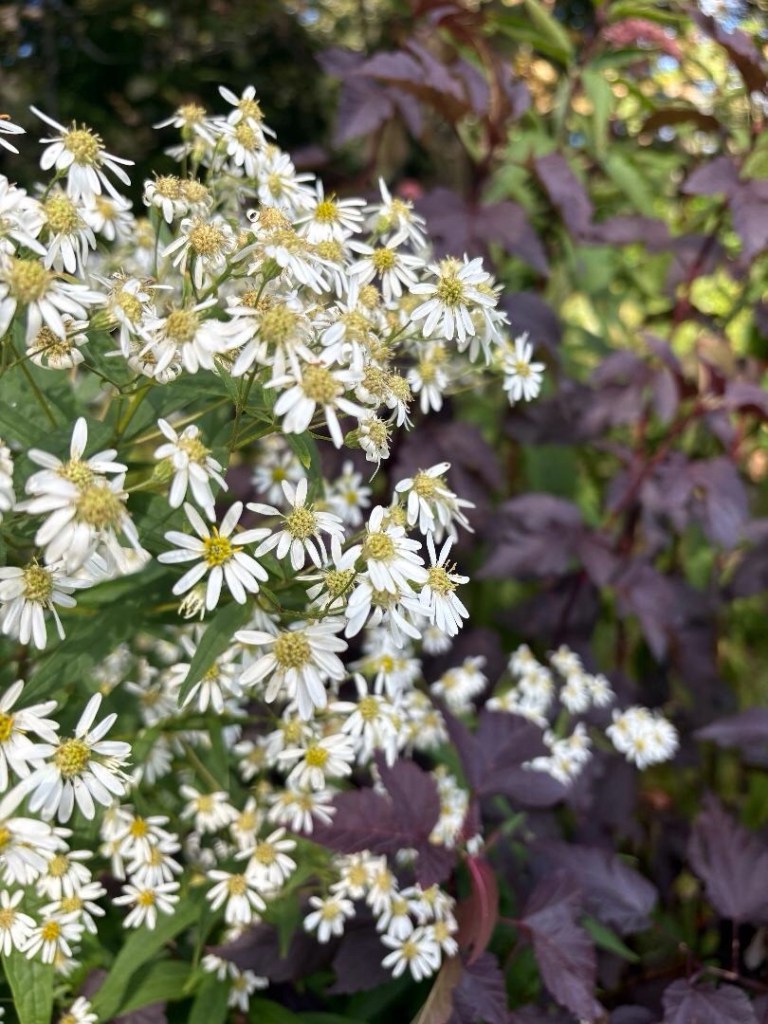
Then there are perennials that are just getting into their stride providing a late splash of colour during September and October such as the Michaelmas daisies. Officially one of their new botanical names is Symphyotrichum, however I think the vast majority of us will continue to recognise them as Asters with their daisy-like flowers mostly in shades of white, pink to purple.
A nice plant combination I am enjoying just now is the narrow leaved Aster along with other late-flowering perennials Eupatorium and Persicaria, all three loved by butterflies on the days the sun is out. All three of these are huddled around the deep-purple foliaged Physocarpus shrub making a fine early autumn display.
This common ninebark shrub is one I’d happily recommend for the garden, you could cut the stems hard back to the base each late winter to enjoy the colours of the fresh new shoots good for cut flower arranging, but the bark of mature specimens are worth looking out for and the attractive way it peels into layers. Hence how it gets its common name.

