For the time of year it is, I’m amazed just how good the rose garden is looking at the moment, as is the garden as a whole if I’m being honest. Normally at this point in October, I’d be expecting plants to be looking a bit more tired, still doing their best to flower but slowly running out of energy. Then pockets of dropped foliage gathering around beds not being able to hold onto the plant any longer but not yet fully defoliated in their winter state either. I’m not really seeing any of this at the moment.
The rose garden today still has an aura of being in its full summer glory yet with the light levels not being as strong, the colours seem to be standing out a whole lot more on the English shrub roses growing from the striking crimson-red of ‘Thomas Beckett’, ‘Elizabeth’ a more crisp apple-blossom pink colour that fades to a gentle shade of white. Then possibly my favourite rose, ‘Lady of Shalott’, that’s buds start off rich orange-red that open up to reveal loosely arranged orange petals with those on the outer a complimentary salmon-pink.
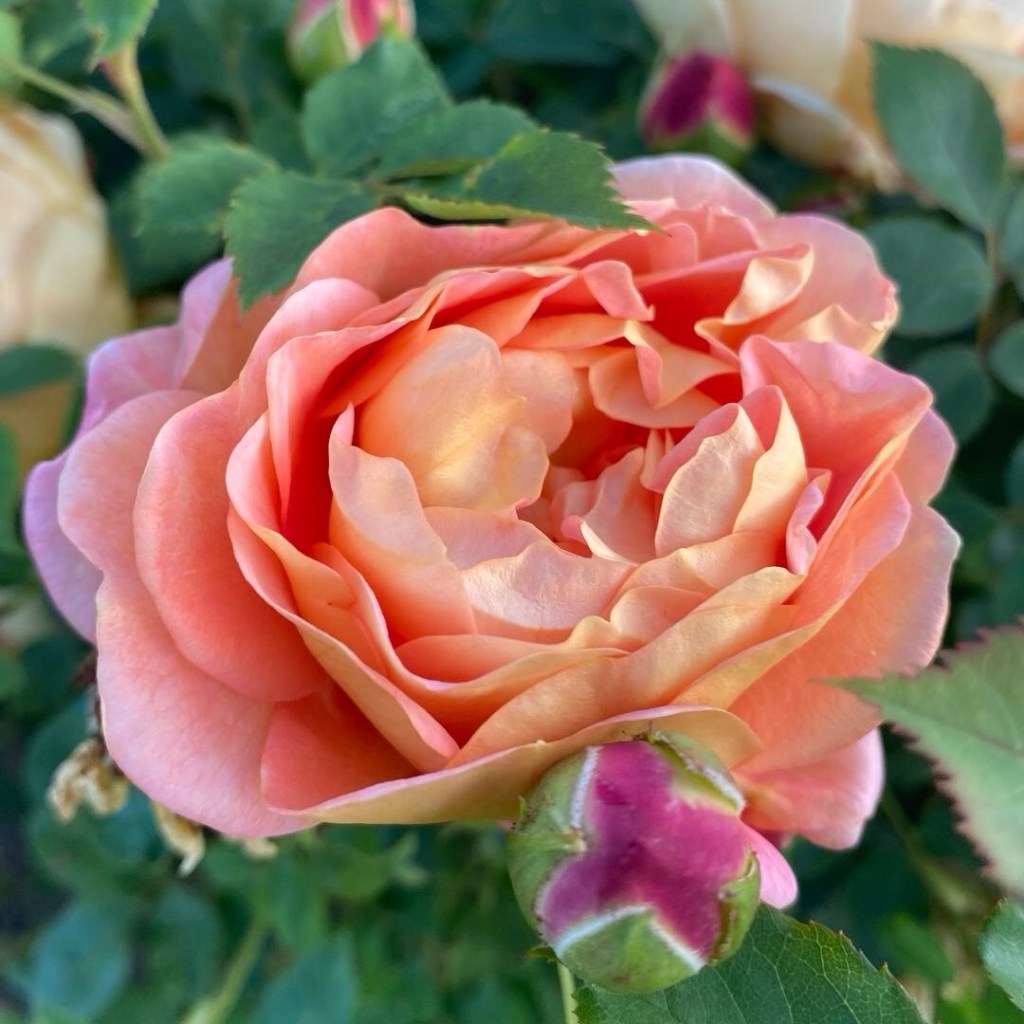
I’m starting to become quite fond of roses falling for their colourful and fragrant blooms, that if you choose the right one will flower all summer long and clearly now into mid-autumn. I’m fortunate to be looking after a collection of roses that combine the styles of the traditional rose bed that gained popularity in the Victorian era, along with the cottage garden style growing alongside plantings of catmint, geraniums or the purple foliage group of the baneberry, Actaea simplex.
Roses have been a plant for gardeners since before Christ being written about by Greek philosophers and depicted on coins found of the islands of Rhodes, records also show that they were being cultivated in China 5,000 years ago.
The English shrub roses that I mostly grow today are a hybrid rose created by David Austin. These combine two great traditions that of the classic charm, rich fragrance, and dense, multi-petaled look of old-fashioned garden roses (the name given to the group of roses grown for centuries before the breeding boom of the late 19th century), along with what became modern roses and their ability for repeat-flowering, resistance to disease and diverse colour range.
In effect a super rose has been created, a group that went into become warmly known as ‘David Austin Roses’. However, just as the French have marigolds, the Japanese chrysanthemums and the Dutch have irises, the breeder himself wished to associate them with the country he felt had a simple and genuine love for gardens, so they became known as English roses.
As the rest of the garden is getting itself ready for a well-earned winters rest, now is actually a good time for thinking about planting roses if you fancy having your garden to be graced with a climber to wrap around an ornamental obelisk, a rambler scrambling up the side of a garage or using a tree as a host, or a good old shrub rose to compliment the perennials growing in your garden.
Most of the plants we buy come in containers, or pots, basically they are surviving away in their own little garden ready to be transplanted into their garden for life. This can be done at any time of year as long as the ground is workable i.e. nice and open, not frozen or waterlogged. Come the winter months when deciduous plants are enjoying their winters rest, shown by the dropping of the plants leaves, we can also purchase plants as roots so not in a container and without any soil or compost around their them.
Known as bare-rooted roses, these are now available to purchase until mid-April with there being a few good advantages to plant via this route rather container grown.
The main one is the cost which with bare rooted can be at least a third cheaper over container grown, it’s also a far more sustainable method of receiving your plants as they come without a plastic pot and transport costs are lower as you can get more plants into one box. Then finally, the one we most wish overall is for our plants to establish happily in their new home which bare rooted will do from day one, not having to first break out of a pot shaped root ball of a container.
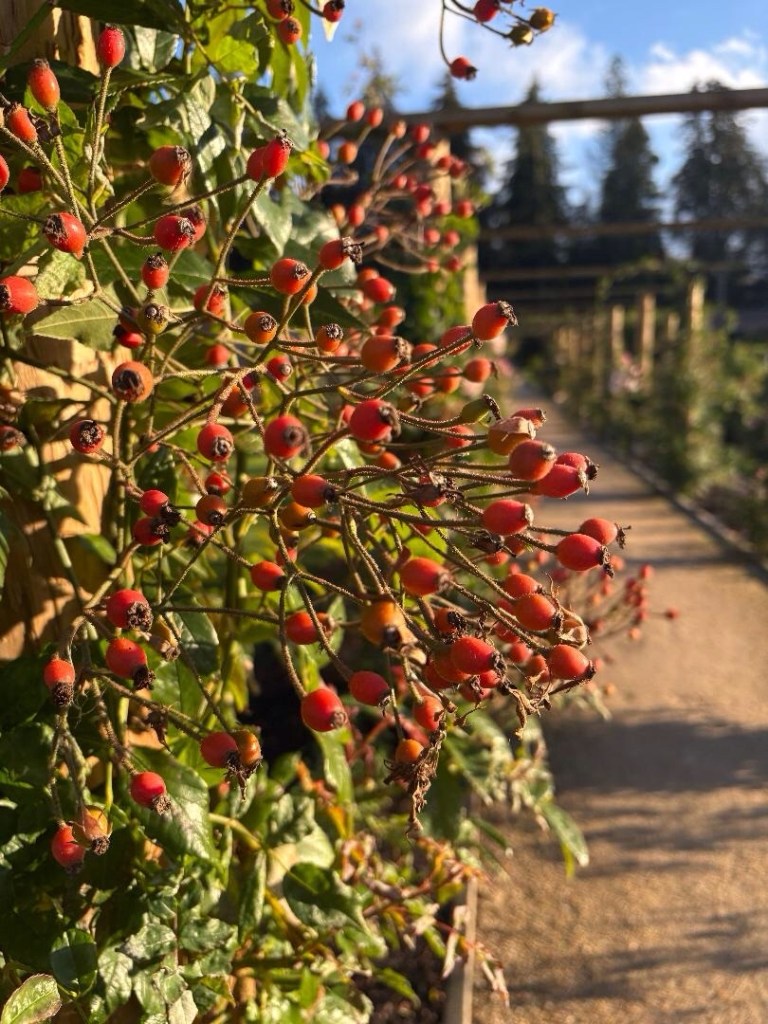
The winter months are also the time for doing garden projects such as a rose pergola walkway that gives the opportunity for growing up the way. All summer I’ve been wrapping the stems of climbing roses and rambling roses around the posts of those I look after, allowing me to enjoy the scent of their flowers without having to stoop.
It’s good to check what kind of flowering plant your rose is as for the likes of Francis E. Lester only flowers once in a season, so don’t look to dead-head your plants thinking they’ll keep flowering or to tidy them up. Instead let the flowers develop into clusters of small and oval, orange-red hips and keep taking advantage of the light created by the glowing autumn sun.

