I’ve been back on my tree hunting travels again as I continue my quest to visit every one of the green monuments written about by Donald Roger, Jon Stokes and James Ogilvie in their book The Heritage Trees of Scotland.
When I first picked up a copy of this book fourteen years ago to learn more about the trees that had come under my care as I started my post as Head Gardener at Scone Palace, I never would’ve believed how much it would go on to develop in me a fascination for Scotland’s life story told through trees.
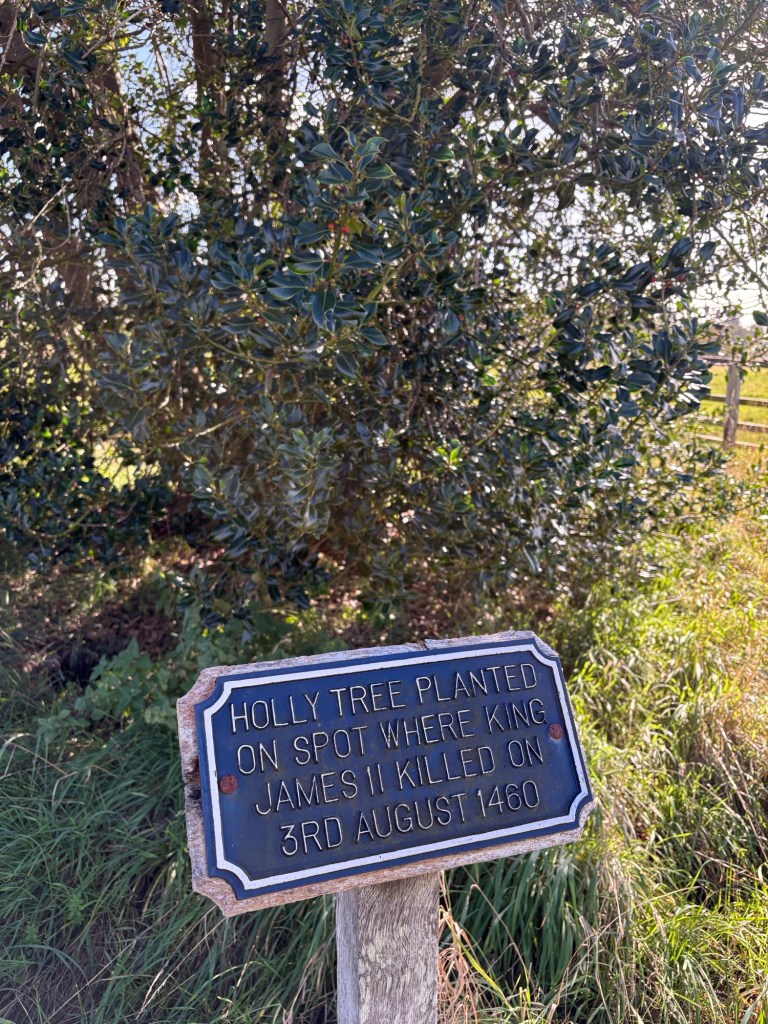
Taking me all around the country, I’ve now managed to personally touch thirty-five of the one-hundred and thirty-four beauties featured, meeting the likes of the ‘King James II Holly’ down at Floors Castle on the eastern edge of Kelso, marking the spot where the King died when a cannon loaded with too much powder exploded. Then there’s the five-hundred-year-old ‘Clachan Oak’ that still bears the iron hoops where petty criminals were once chained to, and ‘Neil Gow’s Oak’ found in Dunkeld on the banks of the River Tay where this famous Scottish fiddler is reputed to have composed many of our country’s best-loved reels in the shade of this sessile oak.
This time I made my way into the heart of Aberdeenshire, a real picturesque part of the country with rolling hills that I must confess to never really having explored before. An added bonus to this heritage tree ‘bagging’ is that I’m visiting parts of the country I may never had a reason to previously and being the school holidays, I also had the pleasure of being joined by my daughter. She’s a kind soul and initially with the promise of an afternoon chai latte and cake, I suspect she may have come along simply to keep her dad happy but I could tell my young apprentice soon got into the excitement of trying to spot a tree from the woods.
First up, ‘The Twin Trees of Finzean’, two remarkable Scots pine trees that have fused together to form a natural arch when a branch from one of the trees naturally grafted itself on to its neighbour, forever joining both together.
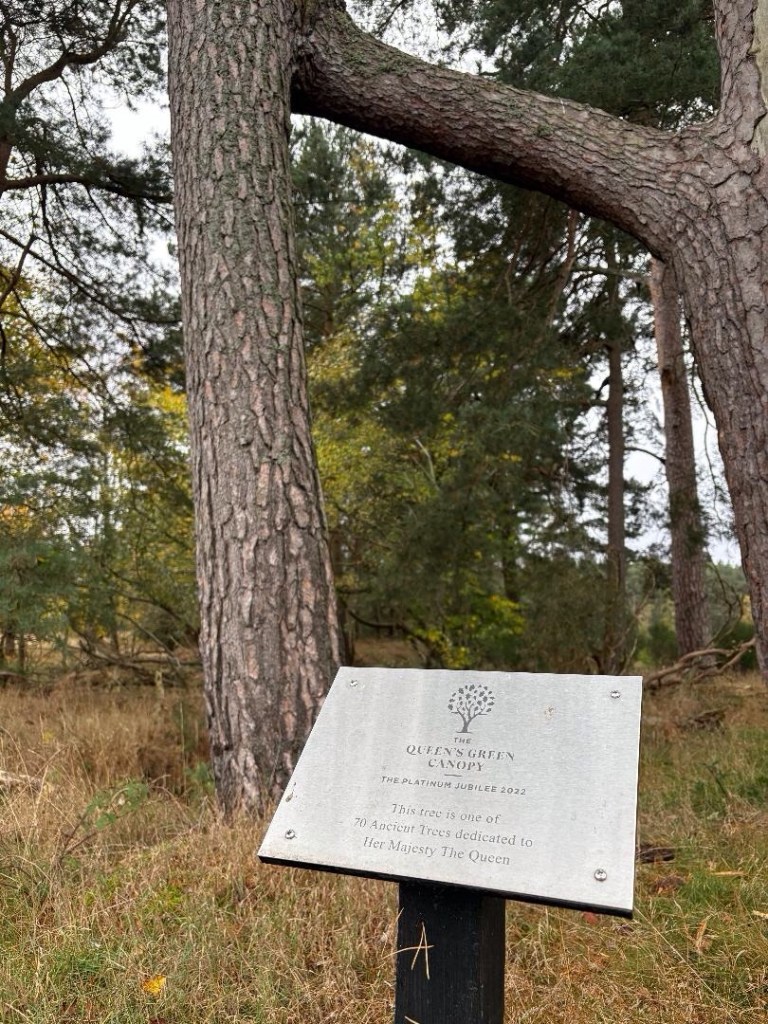
Finding these trees can sometimes feel like trying to find a needle in a haystack only having a short description by the authors to go by, so much so I’ve even found myself walking round in circles on forest tracks going past the tree numerous times that I was searching for!
That’s part of the fun though.
On this occasion I drove past the wood I believed the twin trees to be in so pulled into a car park to get my bearings. Maybe this whole adventure I’m on tracking down these trees is me trying to capture the feeling of what the great plant hunters of the past experienced, searching for hidden gems in foreign countries to collect seed for growing back home, and like them, I need to be opportunistic. To be fair though, I doubt David Douglas, George Forrest or Archibald Menzies ever took advantage of group of lovely ladies in the Finzean village hall gathered together for their knitting class but I’m certainly glad I did, grateful for their directions to make the short trip back the way to tick these two trees off my list.
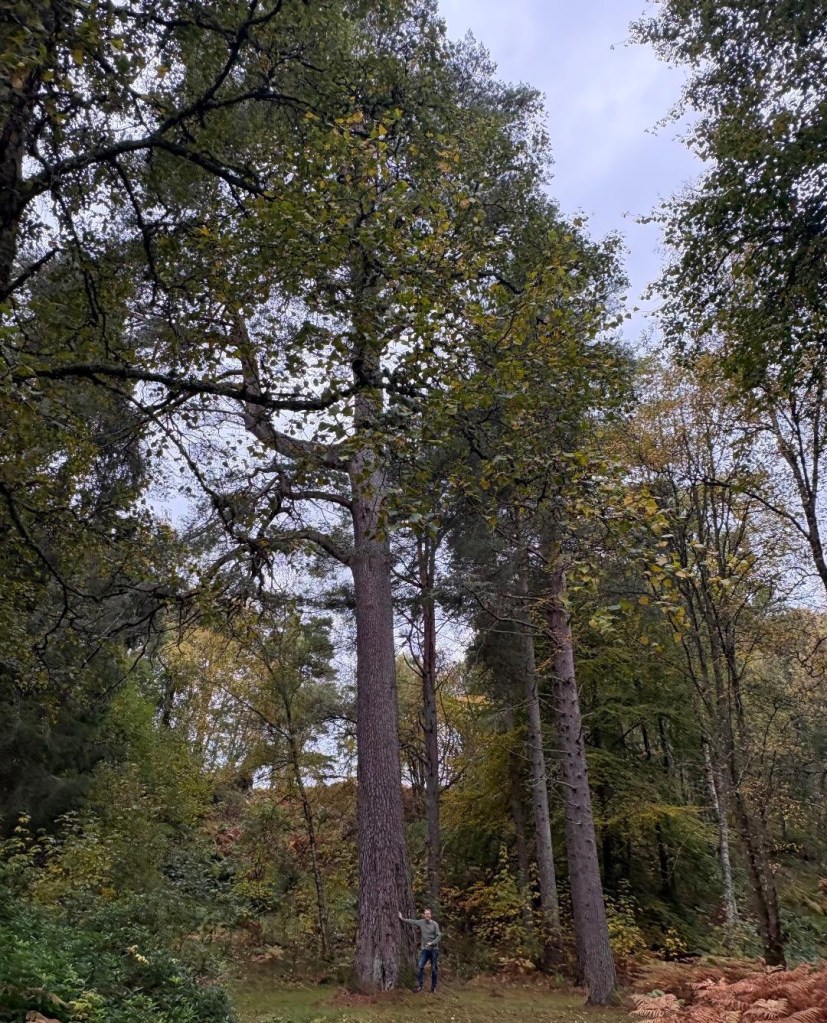
Next was technically an unplanned find on the day grabbing an opportunity to view the Queen of the Firs as we passed the main entrance to Ballogie House near Aboyne where it grows. I love how these old estates today have to diversify to help with their upkeep, today being a wedding venue where this giant of a Scots Pine that towers over 37m in height, is recognised for its beauty in the photos of couples special day.
Just as I was about to give up trying to find this tree, the carrot cake was earned by my daughter spotting the pine that was recorded as having being planted back in 1792, found nestled amongst the shelter of a wood, getting its name as Scots pines were once known as Scots Fir.
The final tree on our search was for the ‘The Leith Hall Dule Tree’. By now we had realised we had yet to have a picture taken with each other beside one of our finds to remember our day out. However, although the tree being a beautiful specimen of an old sycamore tree we decided that this one may not be the most appropriate, the strong timber being ideal for its former use as a hanging tree!
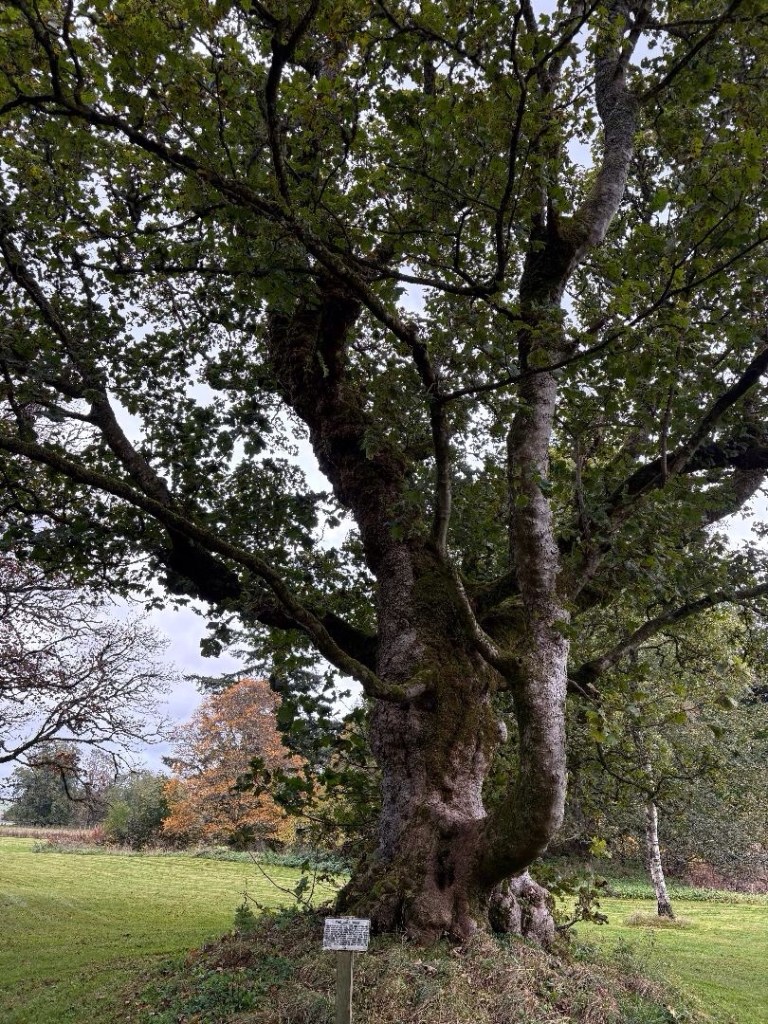
The book alone is worth hunting down in second hand shops to enjoy a natural world look into our county’s history, told through the traditions, stories and colourful characters that go with them. Even better if you can get out there and see them with your own eyes, picturing in your mind’s eye the life they once knew.
This tree concluded our day with the cost of a cake and a coffee for time spent with my daughter being worth every penny. I’m pretty sure she secretly enjoyed herself too.

