I’ve always found weeds intriguing. Just what it is about them that turn us mild mannered gardeners into crazed maniacs, using weapons of mass destruction such as weed killers and flame throwers to try and eradicate them from out gardens.
Many of the plants we refer to as weeds are actually UK native wildflowers but could be any plant growing where it isn’t wanted. We don’t like them as they can outcompete and smother smaller plants for moisture, nutrients, space and light, be a home for pests that will move onto those plants we are trying to grow successfully.
But are they all bad?
One of the most familiar to us is the Dandelion, they just seem to pop up anywhere from a flower bed and immaculate lawn to a waste piece of ground. The yellow flower heads which appear all year round but mostly in early spring, belong to the daisy family being dispersed by their familiar clock seed heads.
It’s funny what we all interpret as a weed though, overlooking the benefits to biodiversity it has as a native wildflower. I think the vast majority of gardeners would identify dandelions as the former but with the plant having such pollen-rich flowers being out at a time of year when food can be scarce, I can understand why the Royal Horticultural Society are working hard to change our mindset.
They’ll need to work hard though as its roots can be wedged into spots that mean you just can’t get in to completely remove and so keep coming back again and again. I recall one gardener who stopped fighting one plant and learned to live with it, just ensuring that the flowers were removed before turning to seed stopping another million dandelions from occupying their garden, even though the seeds may be enjoyed by hungry green, bull and goldfinches.
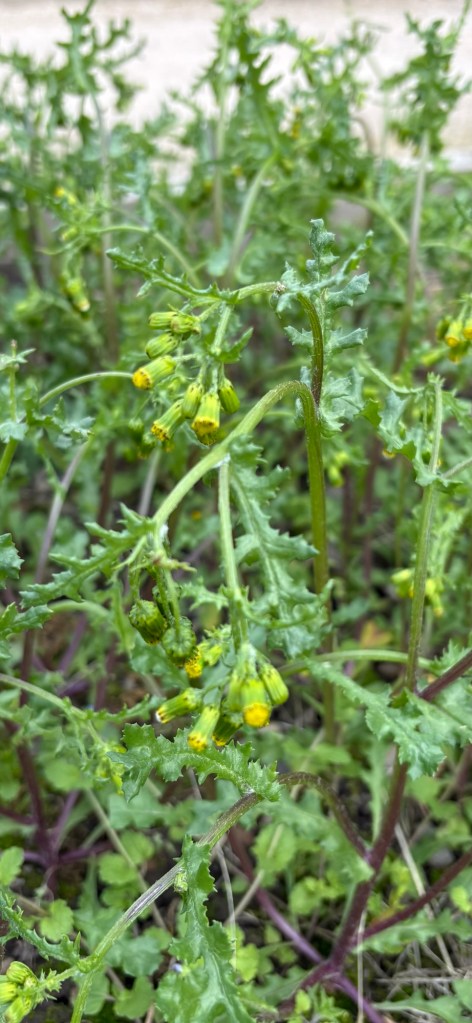
Visible in our gardens just now is Groundsel, another member of the daisy family, it’s the time for this weed to take centre stage popping up around my garden at the moment. It always looks quite a sturdy plant, one that I should find easy to full out without needing any tools, but it can get itself firmly attached to the ground snapping when I try and tug it meaning I’ve still to take a trip to the tool shed to pick up my hand fork regardless.
You can’t get a better demonstration of a weed than this. After the yellow button heads have finished flowering a single plant can go on to produce 1000 seeds and have three generations over a year!
Prolific self-seeders like these are a nightmare to keep on top of. The white flowering bittercress, with low growing rosettes of dark green foliage another one. Pretty simple a plant to get out of the ground but you’ve got to be fast, if you’ve let one flower go to seed you’ll know about it as soon as you give the slightest touch to the seed pods it causes them to explode, launching seeds out in all directions known as ballistic seed dispersal.
Nothing worse when they scatter you in the face!
In a newly planted bed at home, I’m looking over some bare patches of soil where lots of green shoots are beginning to emerge from the ground. Chickweed.
Now, not many gardeners like a weed but this one in particular irks me as it seems to defy my preferred method of weed control being out with the hoe on the first dry day of the week. Although the plant when fully grown looks light and wiry to pick out as a clump, underground is just a mass of fine roots that seem to re-attach themselves to the soil and not dry and fry on the soil surface as I would want them to.

There are annual weeds that complete their life cycle and die, then you get the perennials, the stubborn ones that just keep on common back. Dandelion I’d say fall into this bracket, docks and creeping buttercup too that all will come back unless the whole of the root is removed. Hedge Bindweed is another with the added ability to twine, growing along the ground or even up, as long as it has some sort of support which could be other plants or a fence. I’ve even seen this navigate telegraph poles. Once you’ve got bindweed it’s a nightmare to eradicate having a deep and extensive root system
These perennial weeds survive by having a stubbornness, in the case of bindweed being able to survive and regenerate from the smallest section of root. Accidentally chopping up a root of this plant and spreading it around your garden even innocently by digging an infested area or inadvertently adding to the compost heap when tidying, may see this plant spread further.
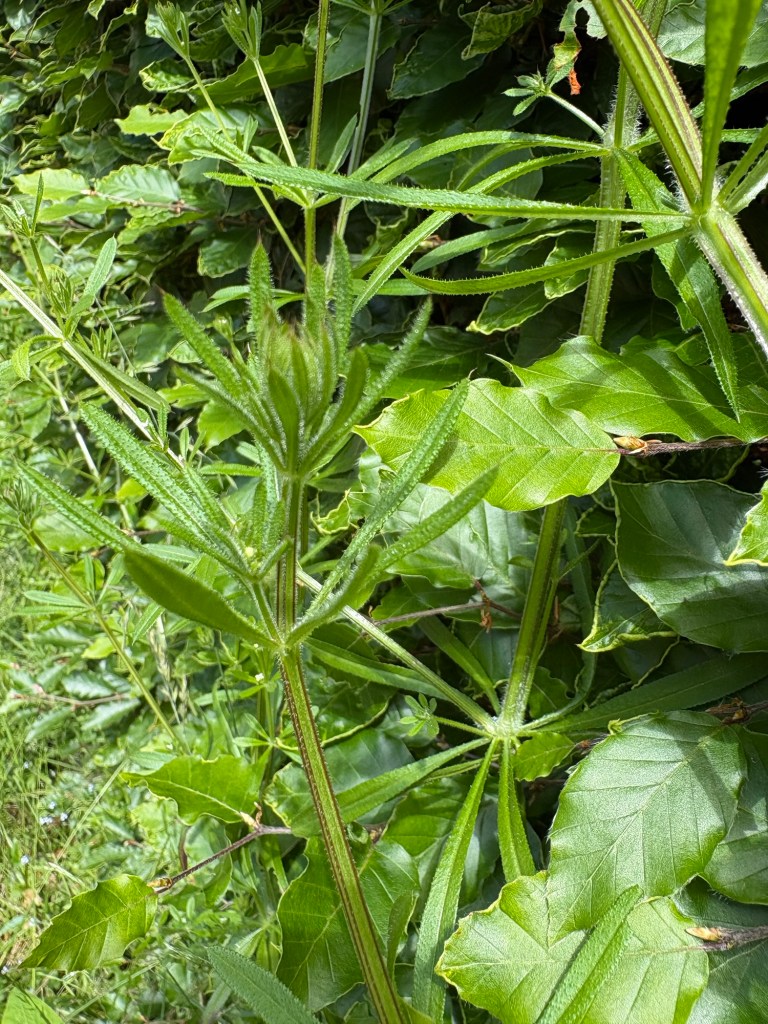
Last weed on my list is the foliage of Cleavers, probably better known to us Scots as Sticky Wille, is covered in hooked bristles allowing it to scramble up plants and hedges in the garden. Its pale green flowers eventually go on to produce peppercorn sized fruits with the same characteristics which allows it to be spread by attaching itself to animal hair or human clothing.
Told you weeds were intriguing!
First published in The Weekend supplement of The Courier and Press & Journal newspapers on Saturday 4th July 2026

