Many households from this week will be hearing the sounds of alarm clocks ringing as the younger members of our families make their returns to school after their summer breaks. No doubt this will often be accompanied many times by the comment from parents that “hasn’t the time flown by!”, we know it hasn’t gone any quicker than normal but when you’re having fun it certainly feels like it.
Which brings me back to the garden. I’m lucky, I find that even jobs that are considered hard work, boring or repetitive to sum, are fun to me, so much so that I quite often forget just to sit out or take a walk around my garden just to simply enjoy the moment they are in. As much as we try to deny as we don’t want the summer to end, this back to school moment is always a reminder to me that the end of summer is getting closer and with it the glorious peak of my garden, so it’s time for me, and indeed us all, to get out there and just simply enjoy them.
Which doesn’t necessarily have to be your own. As head gardener at Scone Palace, I’m quite often more focused on the jobs needing doing than the many beauties that are growing in the magnificent grounds that surround one of our country’s most historic homes, once being where the Kings of Scotland were crowned.
Today I wonder if Robert the Bruce would enjoy the plant jewels that I took in as I enjoyed a more leisurely stroll with my dog around these vast grounds.
We’re definitely moving into the time of year where the many Hydrangeas are taking centre stage in the gardens. Being favourites since their introduction to our country in 1861, H. paniculata grow in open forests and by streams in the south-east of China and in Japan of their native homes, which is why they probably do so well in our climate here in Scotland. This hydrangea produces pyramid shaped panicles, branched clusters of flowers, in this case creamy-white when they open in late summer before turning to pinks and reds depending on the cultivar you have.
‘Limelight’ is a low and compact shrub with a height and spread of 1.5m where to obtain larger panicles the previous years growth should be cut back to 5-8cm at the start of the following spring. A new Hydrangea plant purchase I have recently picked up is the variety ‘Wim’s Red’ where the flowers will turn to a rich wine-red colour. It’s hard to imagine the flowers can change colour so much helped to do so by giving the soil underneath these shrubs a good mulch in early spring.
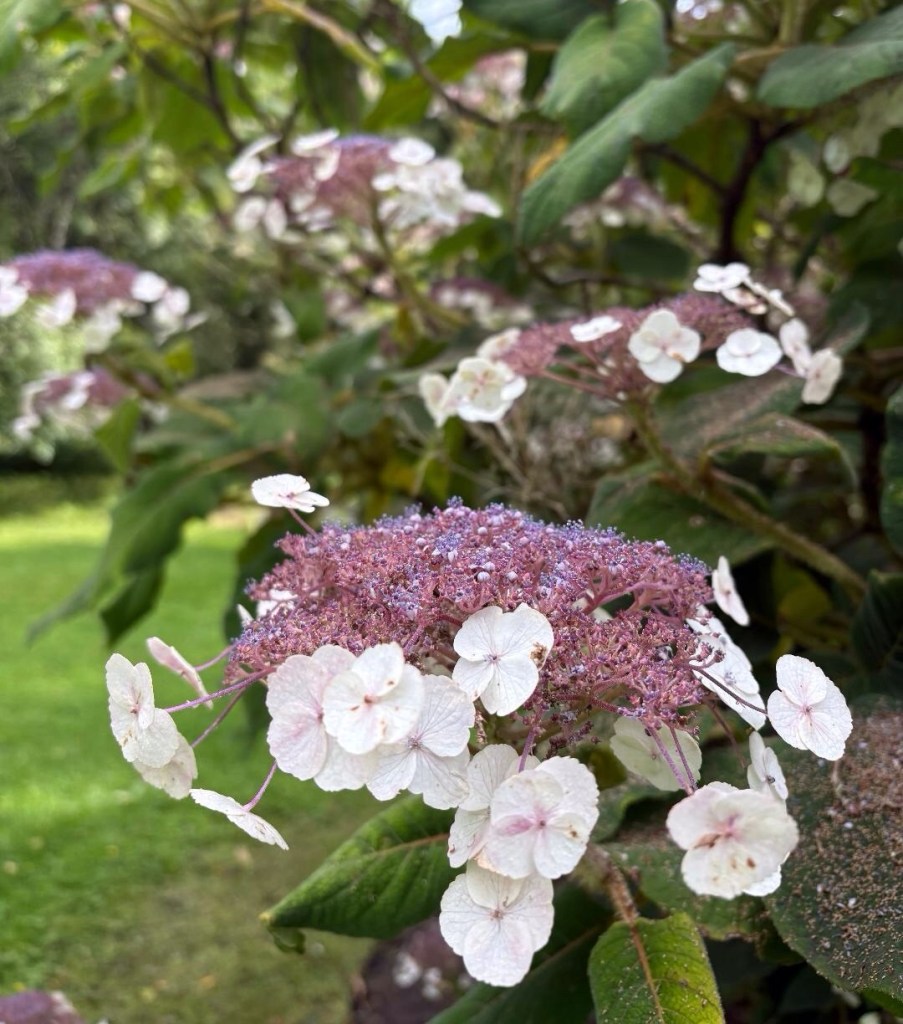
I’ve rarely seen the Sargent hydrangea in shops but to fair, reaching over 3m tall it’s not for your average garden. Look out for this in the larger gardens of National Trust properties and historic houses where atop bristly stems, rosy lilac flower heads as much as 20cm across, stand just above the large and velvety, jungly leaves.
Now it’s not always plant flowers that are the stars of the shows, we know that foliage in autumn can add to a plants garden value but when taking the time to stop and admire the plants growing around me, I’ve noticed how the developing seed pots can be equally attractive and interesting.
In the Palace grounds isa Magnolia wilsonii, plantedat the highest point on a bank next to set of steps, positioned so us gardeners could see right into the pendulous flowers that hang like saucers each June. I didn’t consider today with the crown of this shrub being at eye level we would also be able to enjoy the features of the seed pods, a warm late summer pink colour before ending up brown in autumn when mature.
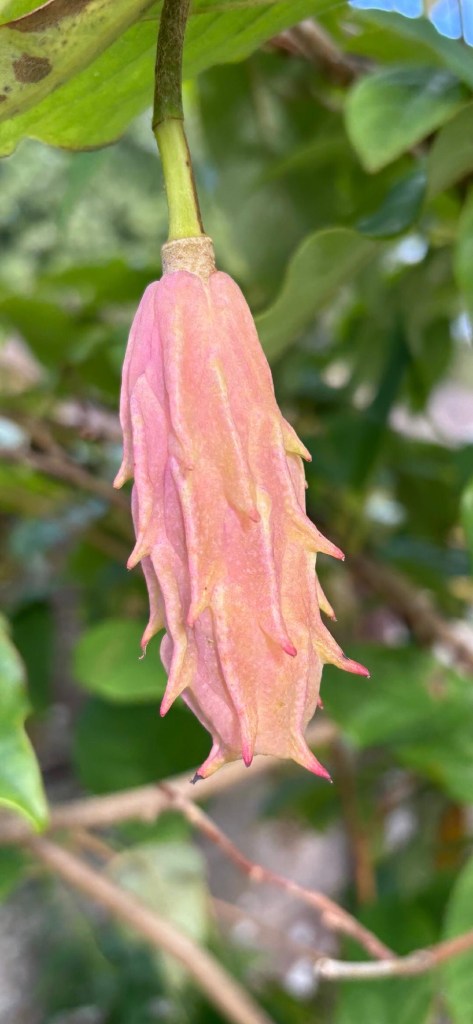
Knowing that plants don’t read the information written about them in books, us gardeners like to push the boundaries with plants sometimes and try to grow those in places that maybe they shouldn’t. After a sense of relief when the Stewartia shrubs pulled through its first few winters, I was even more excited to see the first of its camellia like flowers this summer and even more so the scarlet coloured ornamental seed pod, like five wings being peeled back. Then fans of flowering dogwoods Cornus kousa will be beginning to enjoy the sight of strawberry like fruits hanging where the flowers once were.
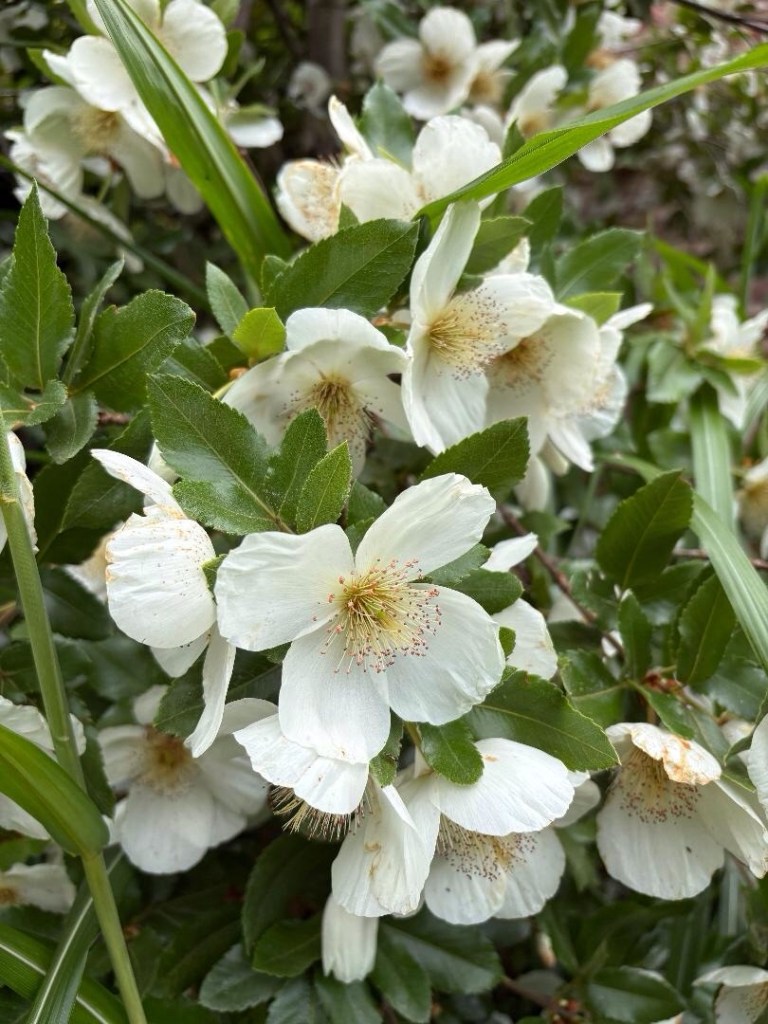
The last is one that makes me feel warm each time I see it flower, always taking me back to when I first met this large upright shrub or small tree during my apprentice days, being one of the first ‘different’ shrubs I learned about over the familiar. Exquisite cupped blooms of silky white petals light up the dark green foliage, the mass of stamens give the appearance these blooms are speckled on Eucryphia ‘Nymansay’
Elsewhere, unusual perennial Kirengeshoma with its waxy yellow flowers grow well with Rhododendron, whilst white flowering Agapanthus grow at the bottom of a wall draped in the yellow bells of Clematis ‘Bill McKenzie’. There’s even bunches of grapes growing outdoors!
Take it from me, there’s nothing better than a good, garden walk.

