With holiday season now upon us, it also comes the time when us gardeners are faced with our biggest gardening challenge of the year. How can we prevent our gardens going to ruin during the time we are away and also be able to enjoy our well-earned break away at the same time!
Being just back from my week away that’s a dilemma I’ve just had to deal with being very lucky that I have the gold-standard package of care thanks to a very kind neighbour who kept all my pots, baskets, and plants growing in my greenhouse alive by watering them for me. Of course, the grass is longer than I would like it to be and the weeds have seized the opportunity to take over in places knowing they are safe from my weekly attack on them with the hoe, but that’s an acceptable price to pay.
With the grass for its first cut on my return from holiday, I’m not going to come in and scalp it down to its usual height in the one go. I know it can take some bashing from us being trampled over as a path or sliding over it pretending we’re John McGinn at the World Cup, but its still a plant after all. My mower has five height settings where I usually cut in the middle at number three, for its first cut back from my holiday I’ll give it a cut at four before coming back down to three the following week being then back to my weekly usual routine after that.
As for the weeds, well that’s a weekly battle anyway but any that look like they are going to flower will be getting pulled out first. Remember the saying, one year’s seeds mean seven years weeds!
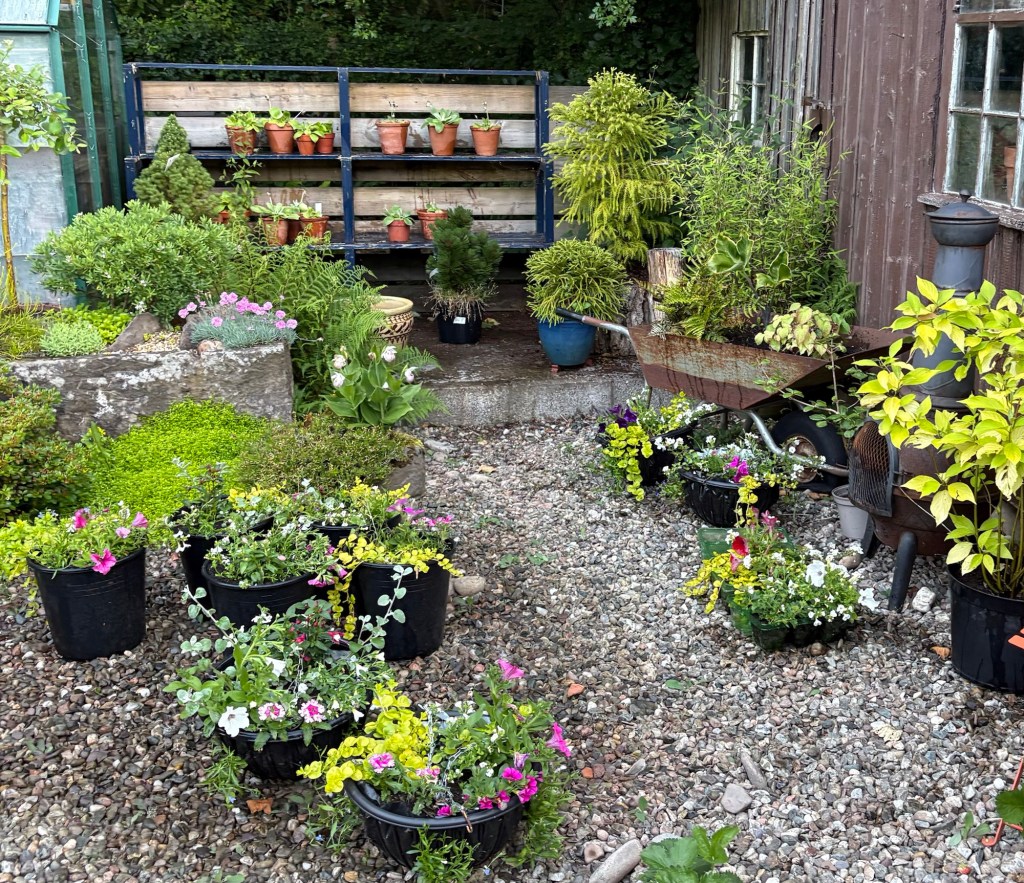
I tried to make things as easy as possible for my watering saviour by taking all my baskets down and huddling them together with my containers in a shady corner but still out in the open so Mother Nature can also help out by keeping them replenished when it rains. And where normally we place containers on feet to allow excess water to drain out the bottom of the pot freely, for the time I’m away I just let them sit on the ground which for a couple of weeks won’t do the plants growing in them any long-term harm.
With my houseplants, placing them back from sunny windows helps but even better in a room on the darker north side of the house, sitting them in shallow trays of water. There’s also the capillary matting method where one end can be draped into a basin full of water for the plants sitting on the rest of the material on top of the drainer, to soak up its moisture.
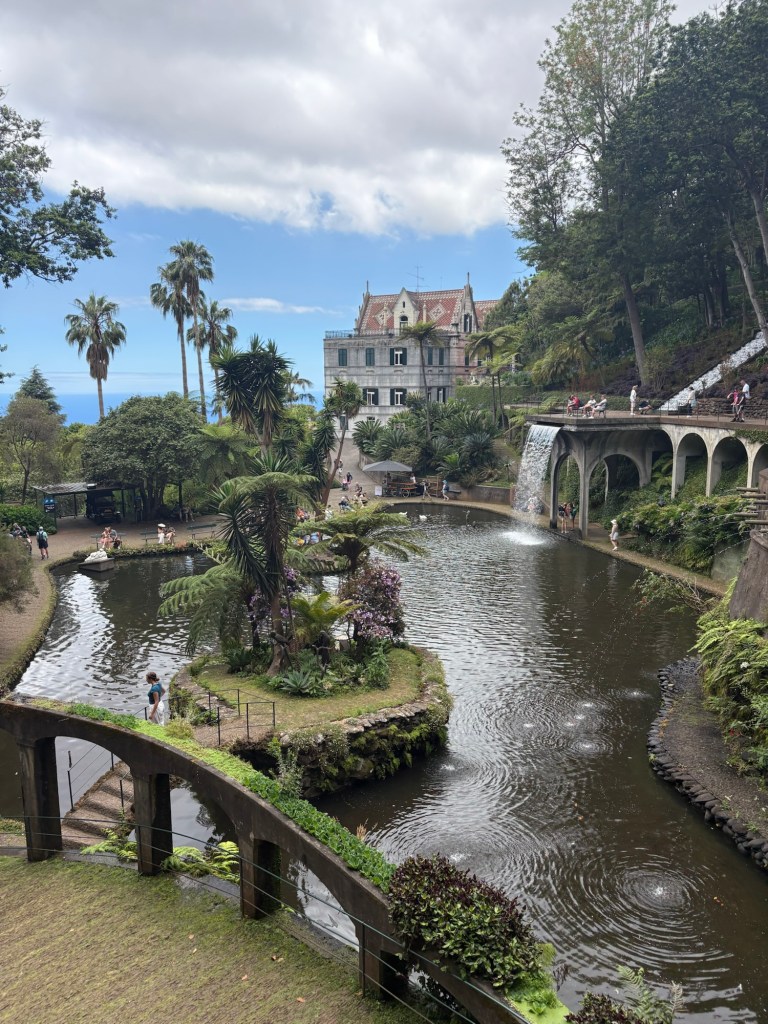
Having all that covered I was lucky enough to enjoy a family holiday this year on the island of Madeira. Over the years I’ve heard lots of fellow gardeners say how amazing a place this is for plants of a tropical feel and I wasn’t disappointed. It really is a remarkable island being given the title as the “floating garden in the Atlantic”. Situated directly off the coast of Morocco, the hot African sun and cold Atlantic winds create a climate never too hot or cold with mean temperatures of 18 and 25 in winter and summer.
Damp winds from the north come up against the volcanic rock that make the island of Madeira, sending them upwards where mist is formed. Mountain forests retain this water on their leaves collecting tons of precious fluid on an island that would not survive with its rainfall alone. As the air heats up during the day these clouds descend on the sunnier southern side, releasing moisture on its slopes and forests where canals called levadas, carry water to crops.
The islands climate make it ideal for most tropical plants, which early colonial settlers took advantage of to create gardens from nothing that we can still enjoy today.
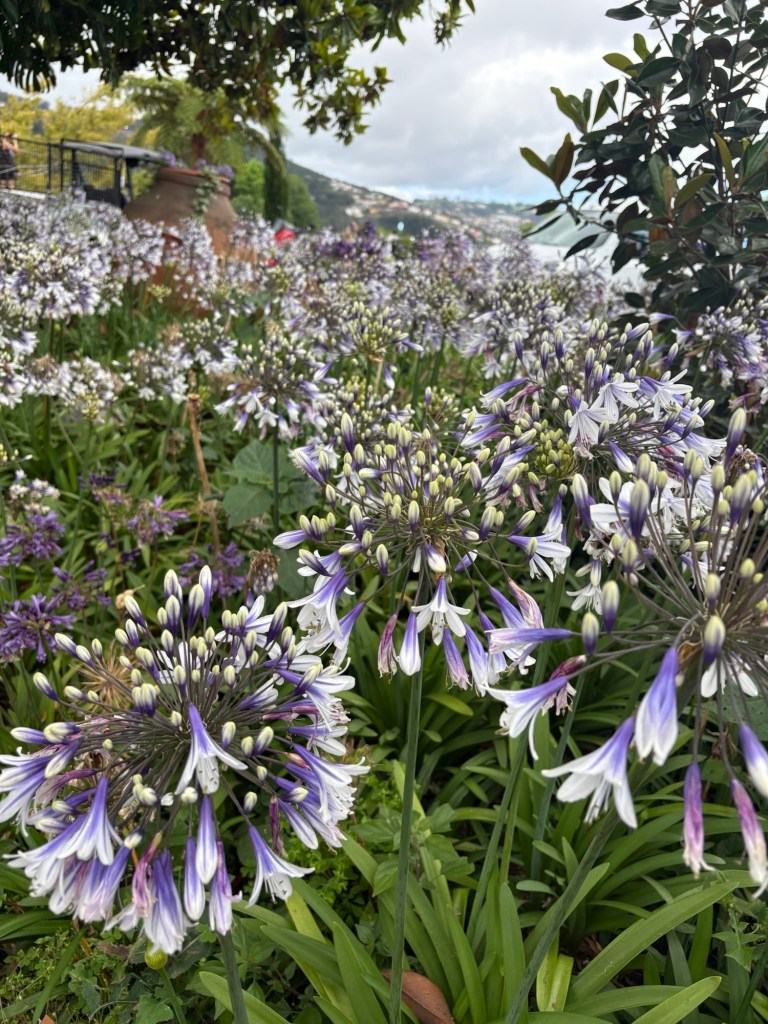
My eyes were blown wide open straight from our plane landing seeing the blue and white blooms of Agapanthus growing like a weed. Driving into the city was the typical site of palm trees growing alongside a yellow flowering Pride of Bolivia tree from South America, then the first of the plants I normally associate growing in pots for the house, Ficus elastica better known to us as the rubber tree plant.
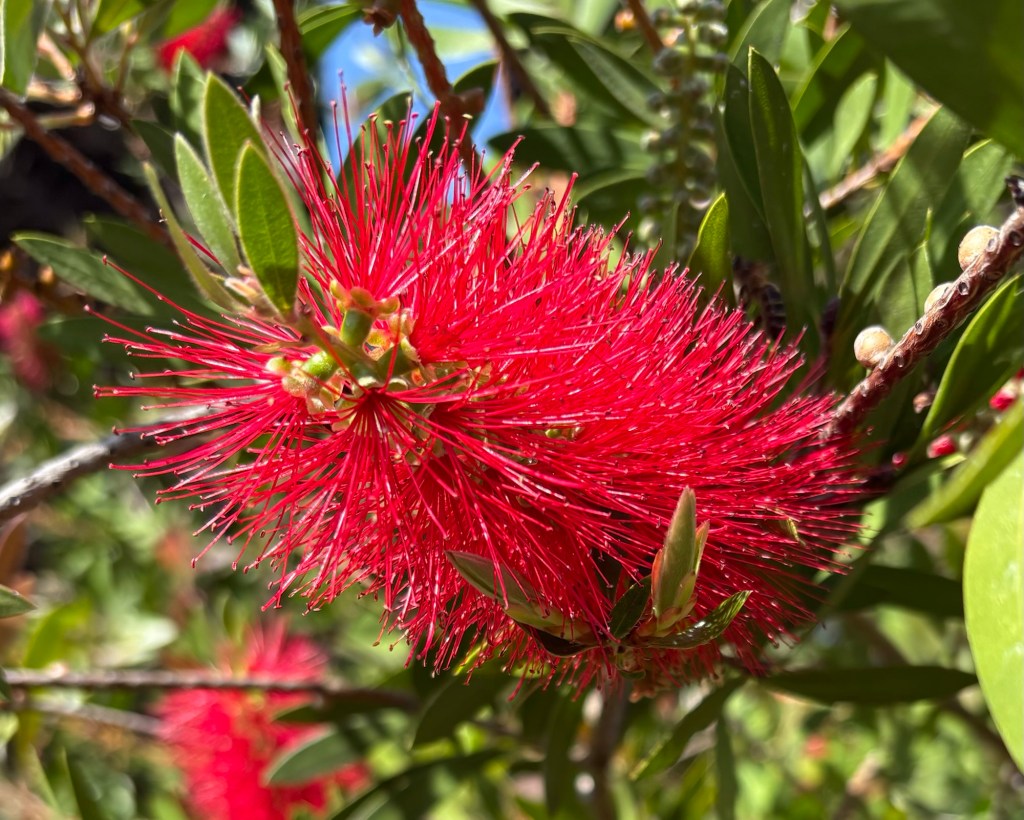
Before I left Scotland I was questioning seeing for sale at a supermarket the Bottlebrush tree from Australia that I’ve only ever seen before as a specimen in botanical glasshouses, yet here it was growing outside as a large shrub. You can’t mistake the bright red flowers on cylindrical spikes up to 20cm long.
Hedges of Bougainvillea in shades of purple, red and orange growing alongside Prickly Pears, tree ferns, Swiss cheese plants clothing walls, the Bolivian fuschia and country roads lined with blue flowering Hydrangea.
It truly is a sight to see and if your into social media I’ve numerous picture put up on my instagram account.
Now back home and enthused to go again with my next gardening challenge, how can I recreate the tropics at my garden outside Perth!
First published in The Weekend edition of The Courier and Press & Journal newspapers on Saturday 11th July 2026
 Brian Cunningham