The topic of climate change never seems far from the table these days. As gardeners, we need no convincing of what is happening, being outdoors for large spells of our time we can see and feel it for ourselves first hand.
The recent heatwaves are a prime example, thankfully not as extreme as down south with amber and red weather warnings being issued there, but Dyce and Fyvie Castle up in the north-east still saw highs of 29 degrees on June 22nd. Then the resulting down pours that clear the air feel like a tropical monsoon with large drops of rain coming straight down, often resulting in streams of water running down the roads and puddling at the low spots as the drainage system struggles to cope with the amount coming down at one time.
How bad will things get? I read and see plenty of reports and charts with scientific predictions, but I guess only time will tell. I don’t believe we should sit on our hands and do nothing, we have a responsibility to the generations that follow us to do something, and I’m convinced that plants and our gardens no matter how big or small, can play a large part on managing problems and conditions we face now and in the future.

During a recent holiday abroad, the daytime temperatures were typically 25 degrees and above. Walking round the historic older parts of town admiring the buildings and architecture, the additional heat created from the tarmac roads and stone buildings could make it quite uncomrtable for me. I’ve read about the cooling effect trees can have in our towns and cities and there I was in a situation where I was experiencing this for myself. Being grateful for a moment in the shade to take a break from the heat of the sun.
One of the first things I did on my return home was to take a look at my own garden, locating a suitable spot close to where me and my family like to sit that would benefit from the shade of a tree.
I’m thinking something like a winter-flowering cherry tree Prunus x subhirtella ‘Autumnalis’ that grows to a height and spread of around 4m that will also have the added bonus of brightening up my garden over the grey months. Or maybe a mountain ash like Sorbus vilmorinii gives interest with its white flowers in spring followed by pink berries from late summer. Even a seat under a Japanese Maple with its slightly more open habit will add a touch of class to your garden and provide a dappled shade for you to relax and enjoy in.
Unless you have a lot of money to buy a fully grown specimen then you need to be thinking a good five years before an established tree to a difference, so the time to act positively is now!

Recently I joined the team at Scottish Water on their podcast ‘Drip Feed’ to discuss the benefits that rain gardens can make to the environmental issues affecting our local communities. They are currently running a campaign called ‘Soak Up The Rain’ encouraging us customers to work together with Scottish Water and do our part in the efforts to stop our communities flooding during these periods of heavy rainfall.
As a passionate gardener of course, I find it sad to see so many front lawns being turned over to low maintenance gravel gardens without any plants or spaces for cars to park. I do understand though that gardening isn’t for everyone and space especially in our urban areas can be at a premium.
As with everything, there’s always a middle ground where everyone can be happy.
Instead of only using solid materials when creating a driveway, combine with a mixture of permeable where the car can park on monoblocks or slabs yet the rest of the area gravel which can take up the run-off, either preventing from entering fully or simply helping to slow the flow of water down that’s heading into the drainage system.
Connecting a water butt to the downpipe will do the same purpose when topping up during downpours if the butt gets used regularly as the source of water for garden needs. However, we all know that it can rain for a few days solid leaving our water butts already full which is where the rain garden comes in.
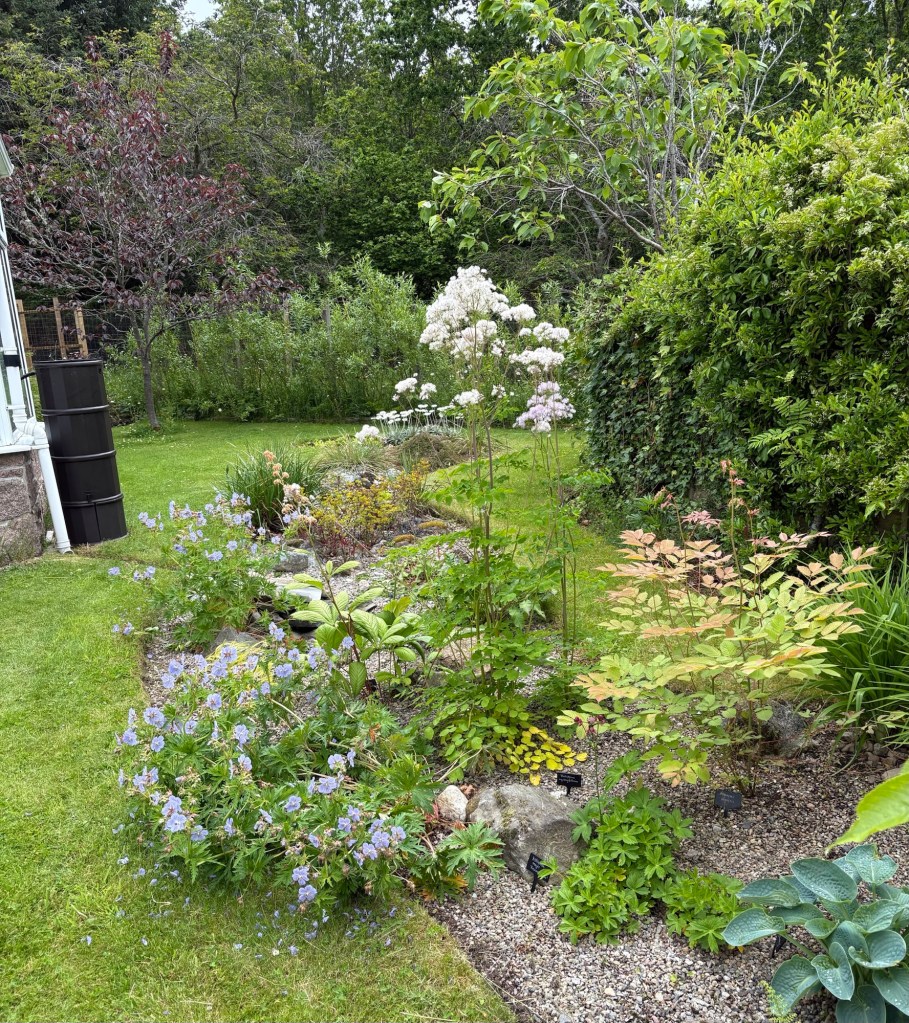
Planted with familiar plants such as Geranium, Hosta, Iris and Rodgersia that make it look and feel like an ordinary border, at the bottom of the downpipe the water can be diverted via a rill into a shallow dug out bed. The rainwater coming down the pipe from conservatory, house, garage and shed roofs will first gather in here before slowly draining away.
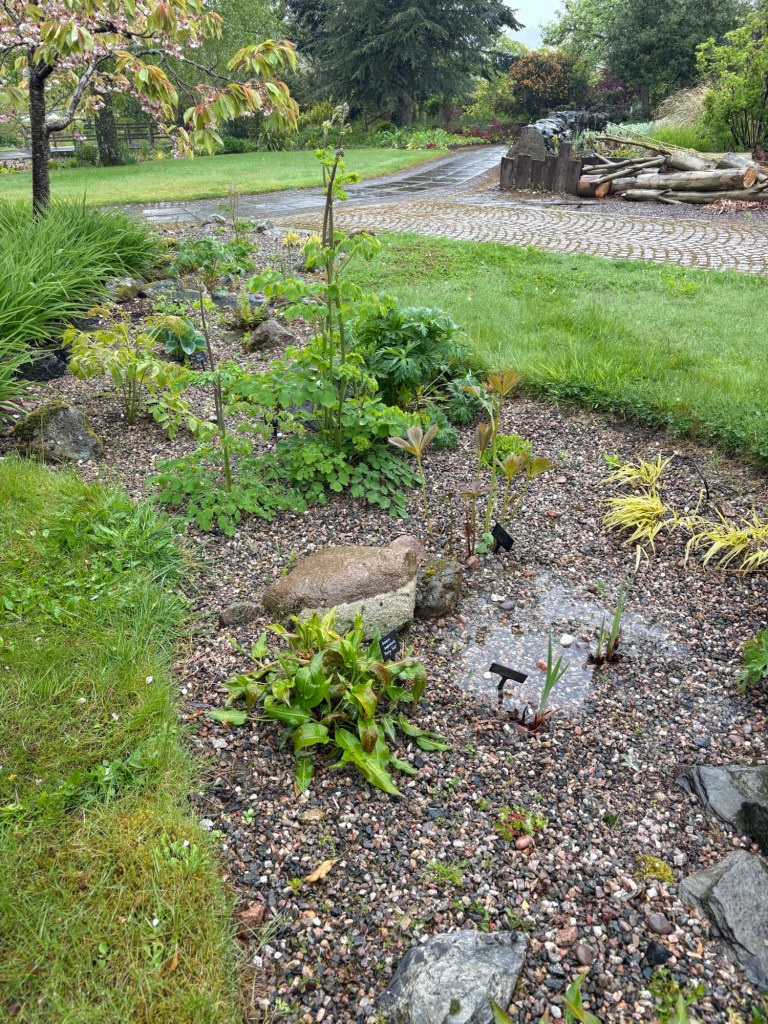
Seeing the one in action we created up at the Beechgrove Garden in Aberdeen has been so satisfying, knowing that this simple plot can make such a big difference.
More information on how to construct your own rain garden can be found on the RHS website and tips from Scottish Water being found at www.soakuptherain.scot