That’s us in August now with gardens up and down the country reaching their peak. Veg plots are bursting at the seams, perennials are so full of foliage they flop over paths, then there’s our seasonal tubs and hanging baskets that are so alive with colour you just can’t help wondering how they get their energy to keep up such a vibrant display.
With all this going on, it may surprise you that I’ve been taking time away from my garden this past week. However, it was to go out visiting a few other gardens!
I know we moan but actually the climate here in Scotland makes our country a very interesting place to be able to grow a wide range of plants. With our weather systems predominantly coming from the west over the Atlantic Ocean, that side of the country will feel the effects of the rain clouds first and with the warming influence of the Gulf Stream, temperatures are usually that tad milder. For us gardeners over on the east coast we may be thankful it’s drier, but we are more likely to suffer from late frosts that can stop our tender plants from growing before they’ve even started in spring, with the potential to bring our season to a premature end with a cold night in September come autumn.
So, in search of something different, I decided I’d take a trip down to the south-west of our country to see just what delights the gardens down there have to offer on the other side of the country.
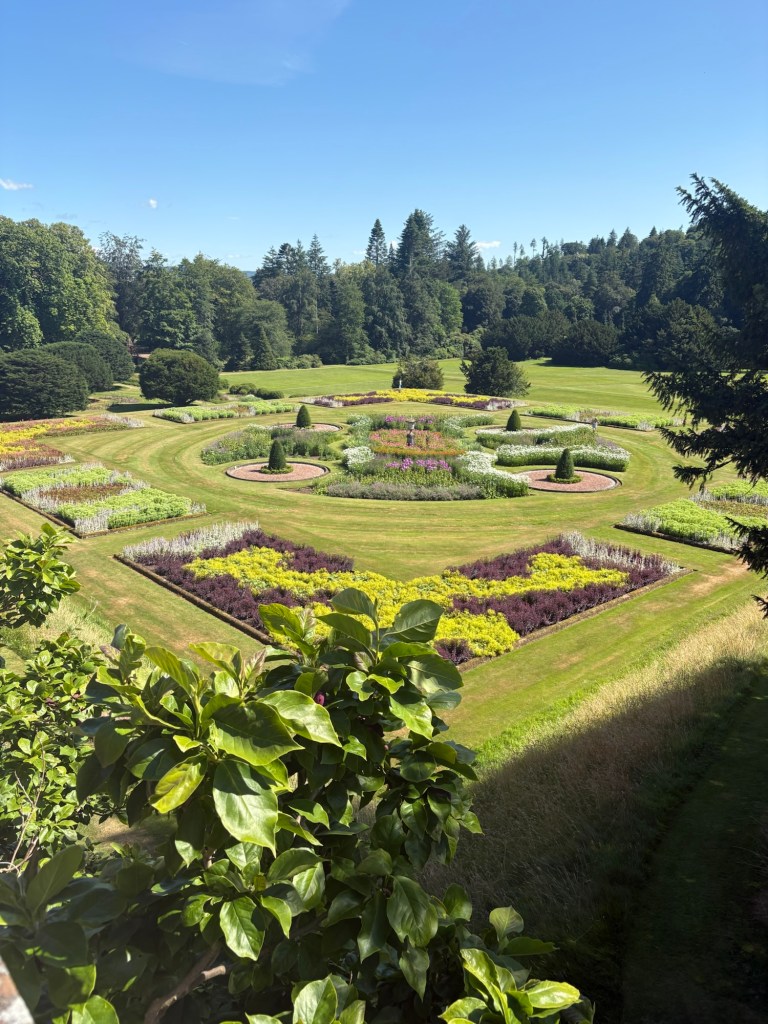
The gardens of Drumlanrig Castle are ones that occasionally pop up in the various articles I read but if I’m being honest, have never really featured highly on my radar. After my visit all I can say is the team down there are needing to shout more loudly of the asset they have. The grandeur of this stately home of the Duke of Buccleuch, is instantly recognised as the ‘pink Palace’ grows in size and stature as we approach via the great north avenue, initially no sign of the treasures this castle hides on its southern side.
Lots of horticultural history here with the gardens first being laid out in the 17th century which then featured the formal, symmetrical parterres fashionable of the time from France. With Drumlanrig Castle sitting atop a hill, the pattern created would be viewed easily and admired from any room within it. Unfortunately, due to costs, changing garden fashions and wars, these parterres of intricate design filled with colourful bedding plants and lined gravel paths, have come and gone over the centuries.
Today the gardens team are bringing back what they can, replacing the labour-intensive formal plants with block plantings of perennials. The design of the remaining parterres revealed by clever use of a mower set at two different cutting heights.
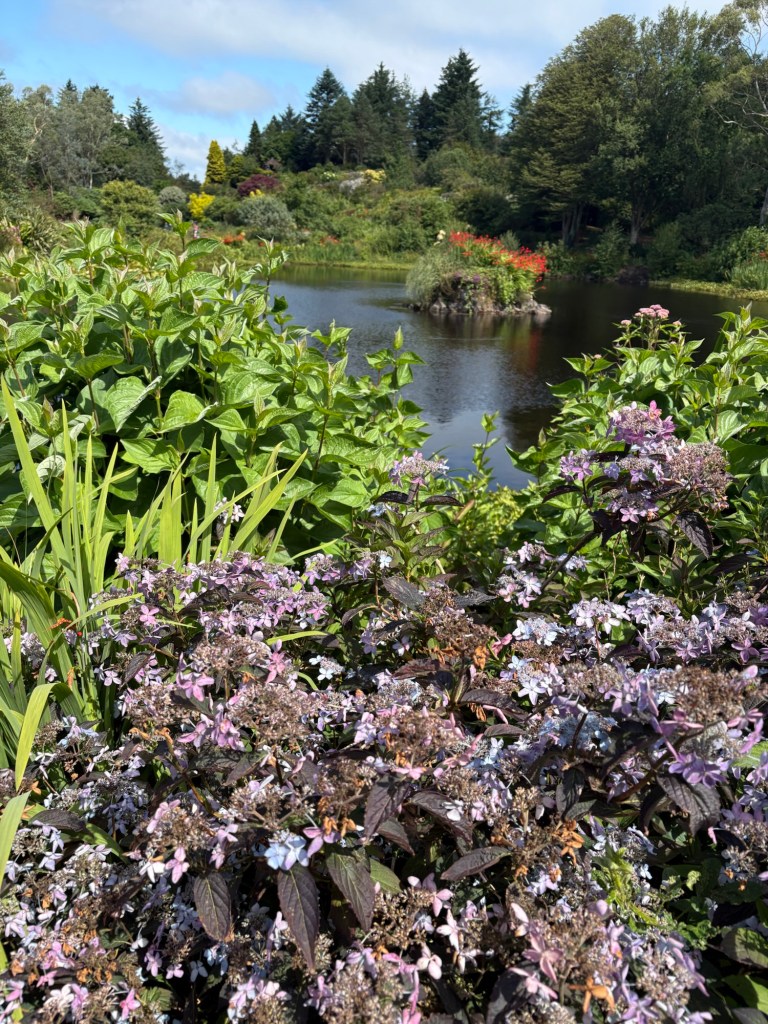
Next stop, I went from a garden hundreds of years old to one only in its forties, the marvellous creation by Tess Knott Sinclair at Glenwhan, carved out in a bleak chunk of moorland, sitting on a hilltop 300 feet above sea level buffeted by winds on all side. Propagating many of the plants herself from seeds and cuttings, this garden is a collection of familiar plantings such as Hydrangea, the most intense blue in colour due to the acidic soil it grows on, to many rare and exotic plants you wouldn’t expect to be growing here in Scotland.
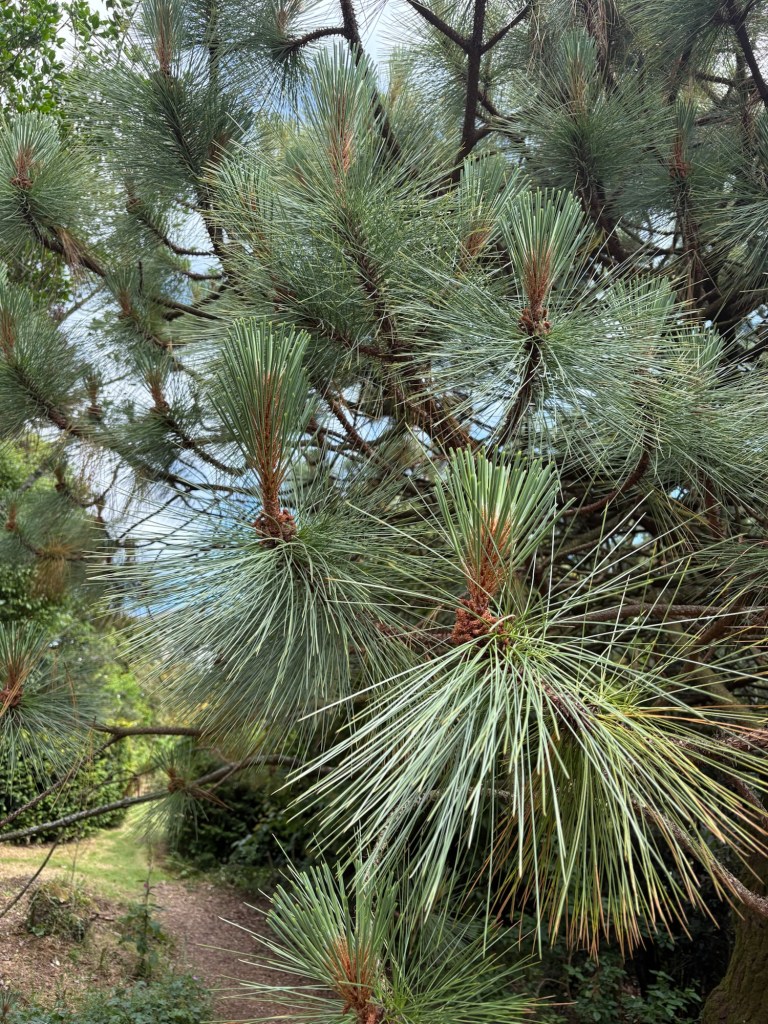
You enter the garden through a narrow path that opens up to a Lochan creating the near perfect picturesque scene of rocky outcrop and colourful plants, all underneath a clear blue sky. My favourite plants found here, amongst many I should add, is a Montezuma Pine from Mexico that at the end of its branches are a rounded mound of needles from which like a candle emerges.
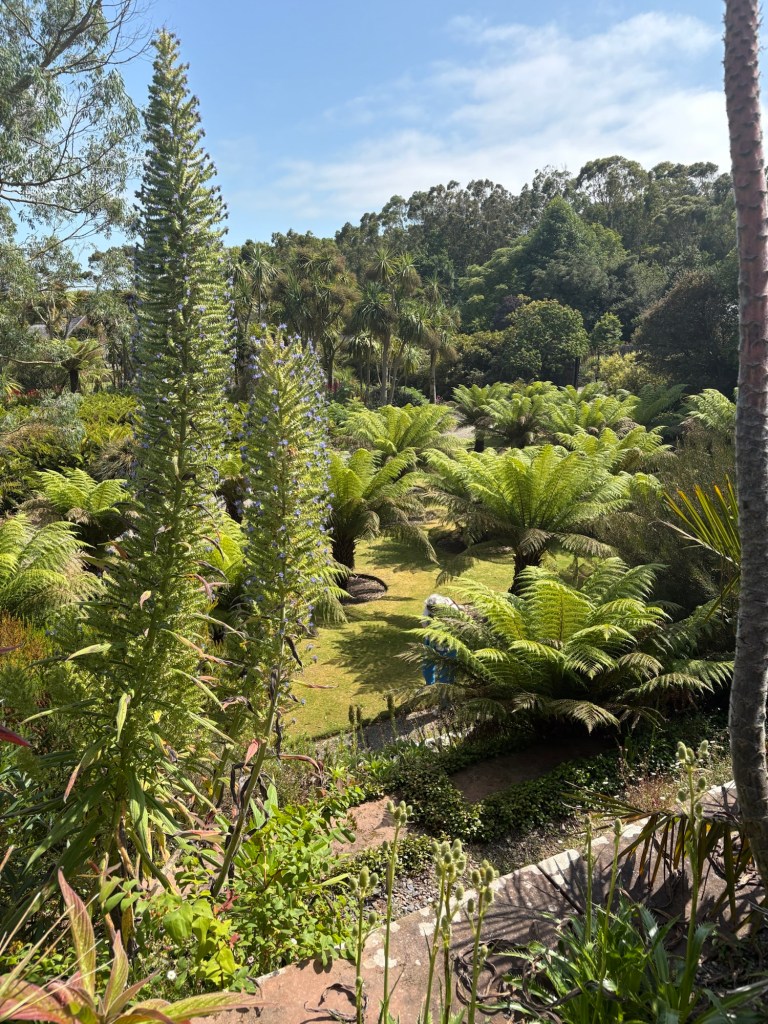
Then we have Logan Botanic Garden. Wow! Palm trees, Tree ferns from New Zealand, lily ponds and large leaved ferns made it feel like I was being transported to the exotics straight from the most southerly tip of the country where I actually was.
Then at Kirkcudbright, the beautiful garden of Broughton House that overlooks the harbour on the River Dee, created in the early 1900’s by the painter E.A. Hornel, one of the ‘Glasgow Boys’ a radical group of Scottish artists.
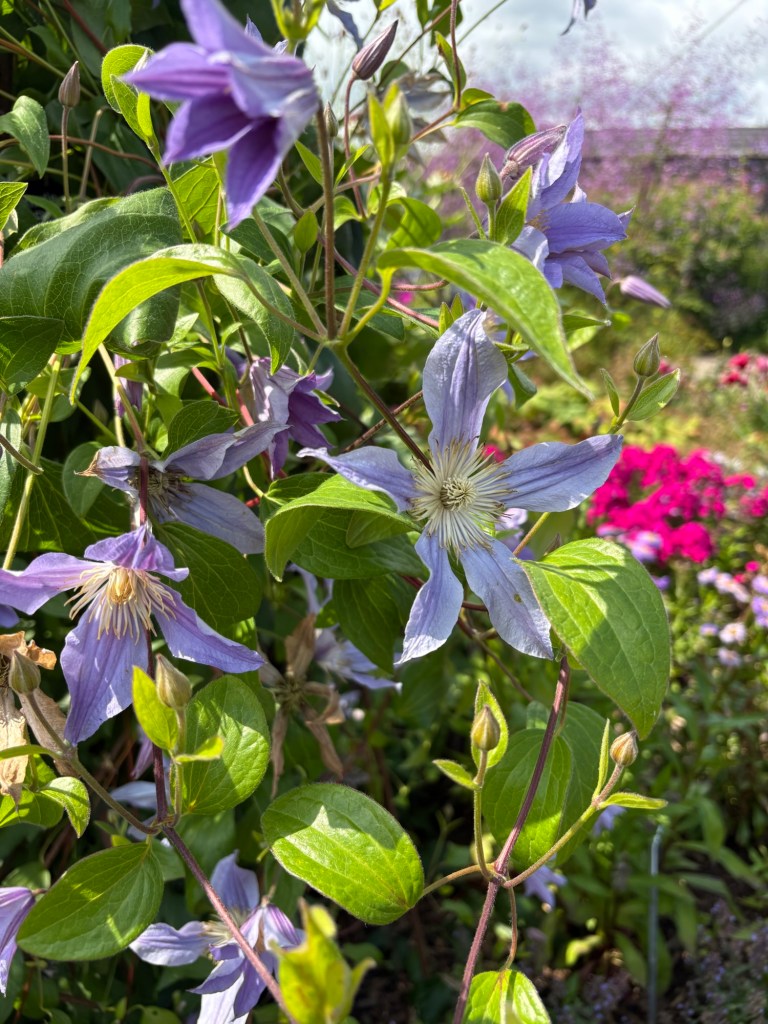
Finally, so I could take home a lasting memory of my gardens excursion trip to the south-west, I paid a visit to Elizabeth MacGregor’s Nursery. A beautiful ½ acre walled garden also acting as a stock bank for the many plants sold here. A highlight here for me was the varieties of Clematis scrambling up walls, pergola’s and obelisks, two of the standouts being ‘Blue River’ hosting an abundance of bluish-lilac-coloured flowers and C. campaniflora with its dainty little bluey-white, nodding bell-shaped flowers. All benefiting from the can full of water they received that morning to keep them going during the dry spell.
To add further to the reputation of this amazing plantswoman, look out in garden centres for the now familiar Anemone ‘Wild Swan’ of white petals and grey-blue streak along the reverse, that has been a feature of our gardens for a few years now, this being one of Elizabeth’s recent introductions.
First published in The Weekend supplement of The Courier and Press & Journal newspapers, Saturday 1st August 2026
 Brian Cunningham